Venice: A Short Guide for Art Lovers
britta kadolsky
Between the lagoon, palazzi, and art history: a look at Venice beyond the Biennale
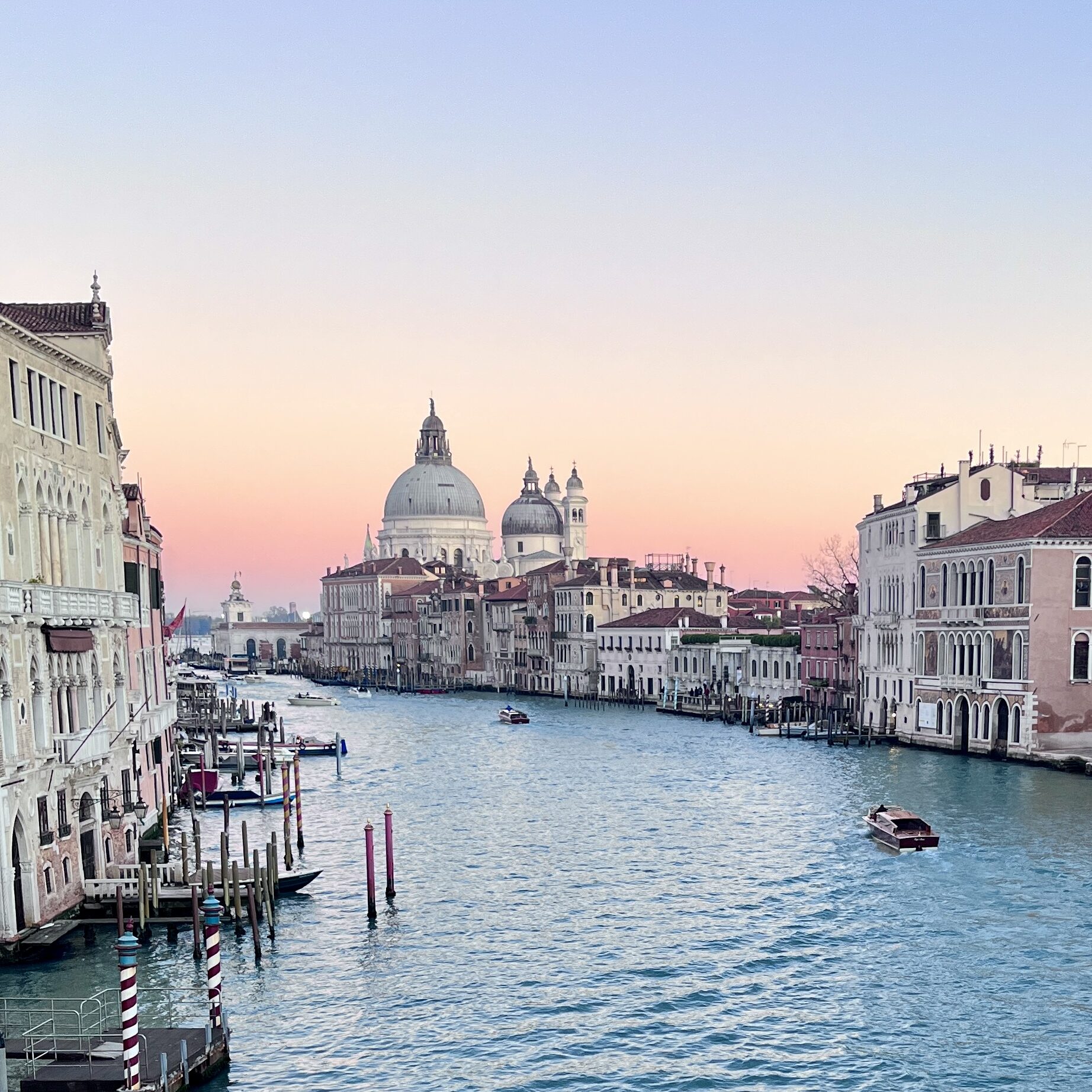
For a long time, Venice was one of those cities I dismissed as overcrowded and kitschy, which is why it took me surprisingly long to finally visit. And then I stood there and could hardly believe how quickly this decaying beauty captivated me: the peeling colors on the façades, the water everywhere, the bridges, the narrow alleyways. Venice feels both magnificent and worn, breathtaking and slightly faded, and all the clichés are true.
Why Venice Works Differently
In Venice, I quickly gave up on carefully planned routes through the city: you simply wander through the streets, take a quick look inside a church, and suddenly find yourself standing in front of a painting by Titian, Bellini, or Tintoretto. Or you end up at one of the city’s 175 canals, but there is no bridge in sight, even though Venice has more than 450 of them.
The roughly 4-kilometer-long Grand Canal winds through the city like an S, and its curved shape makes finding your way around surprisingly difficult. Venice is not ONE island, but consists of 127 small islands that make up the historic city center.
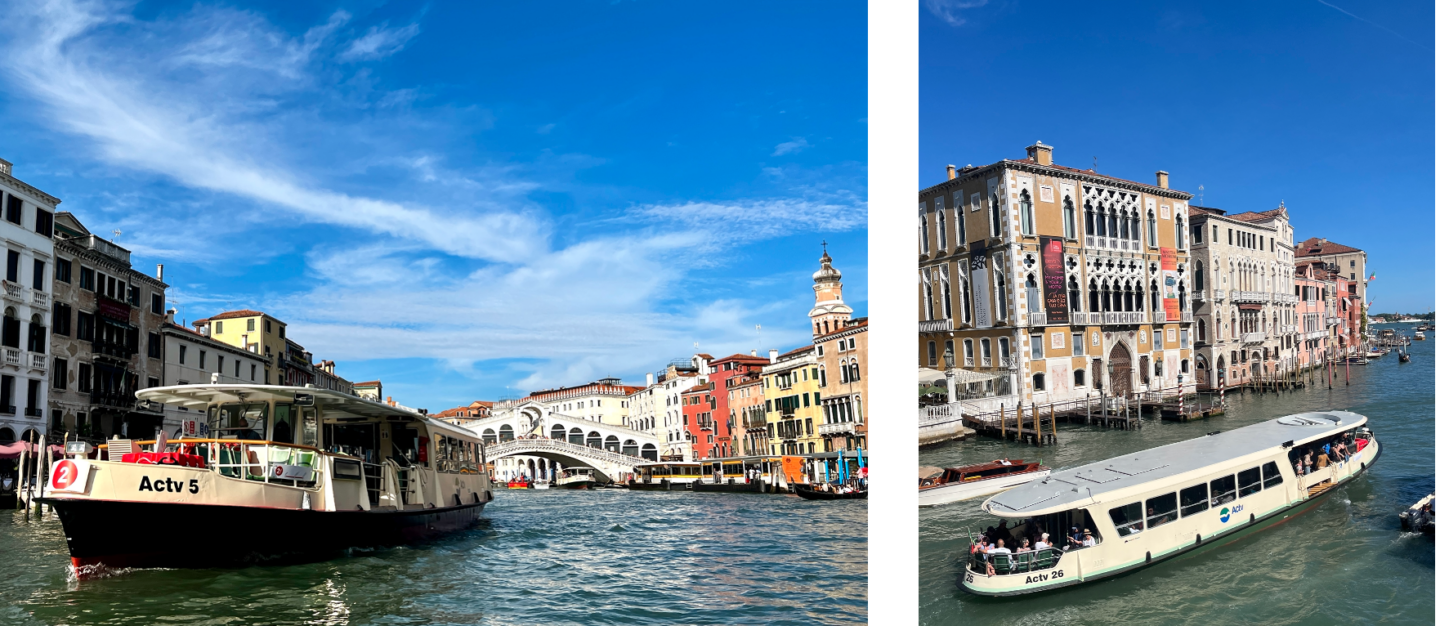
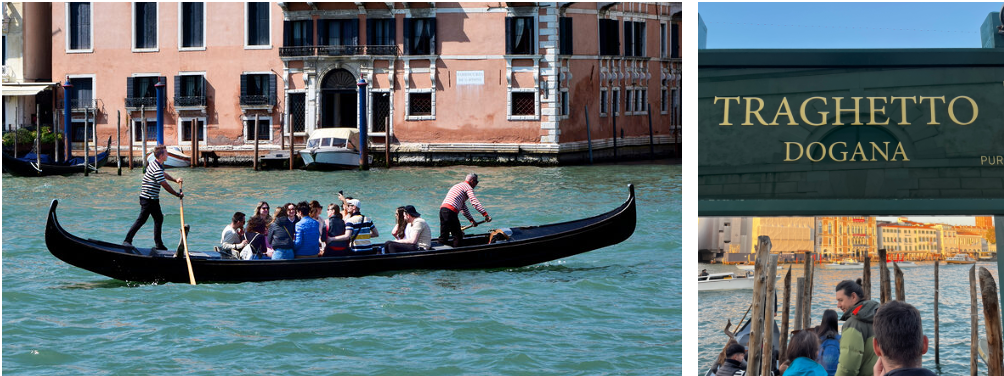
If you want to get from A to B in the lagoon city, you either walk or take a boat: a gondola, a water taxi, or a vaporetto. Gondolas and water taxis are expensive tourist attractions, while the vaporetto is Venice’s public water bus, the equivalent of a regular city bus or tram. Of course, the garbage collection, ambulances, funeral services, and mail carriers also travel by boat. If you want to cross the Grand Canal without walking all the way to the next bridge, you take a traghetto: a simple gondola that shuttles back and forth as an inexpensive ferry service.
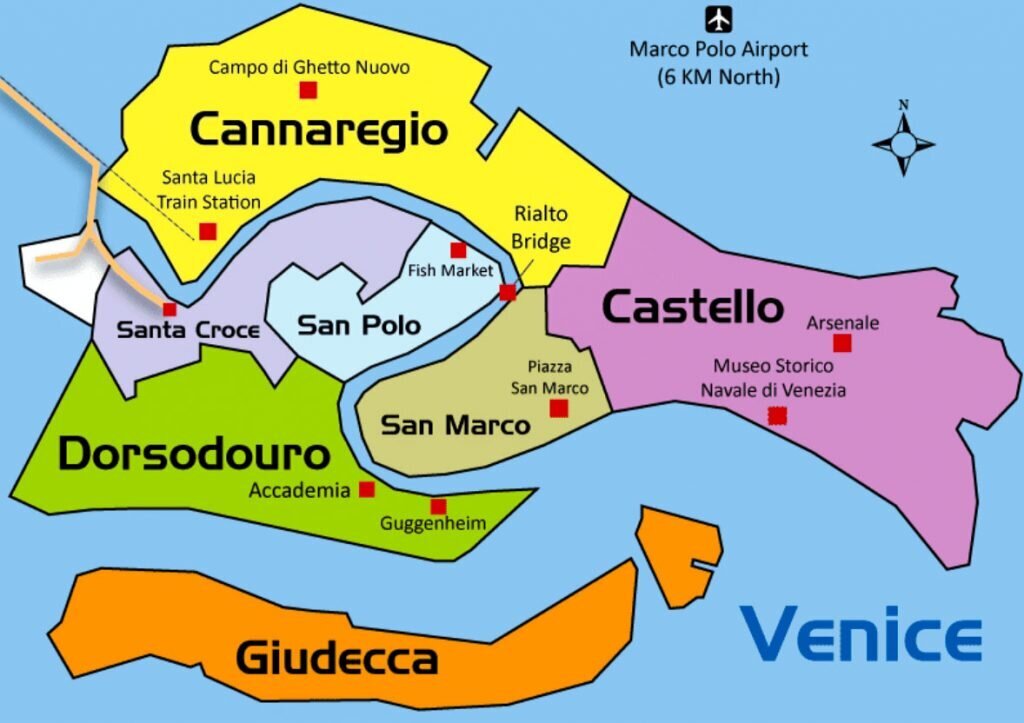
Venice has six districts, called sestieri (one sixth), all located along the Grand Canal, and each with its own distinct character: Cannaregio, Santa Croce, San Polo, Dorsoduro, San Marco, and Castello. The Grand Canal divides them into two sides: Citra on the left side when looking from St. Mark’s Square, Ultra on the right. Finding an address here requires a different mindset: Venice’s house numbers do not follow a street system but belong to each individual sestiere and run from 1 into the thousands. An address here might therefore sound like this: Cannaregio 3027 or Dorsoduro 2451.
Even the Ferro at the Bow of a Gondola Tells the Story of Venice’s Geography
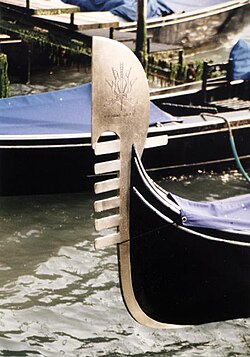
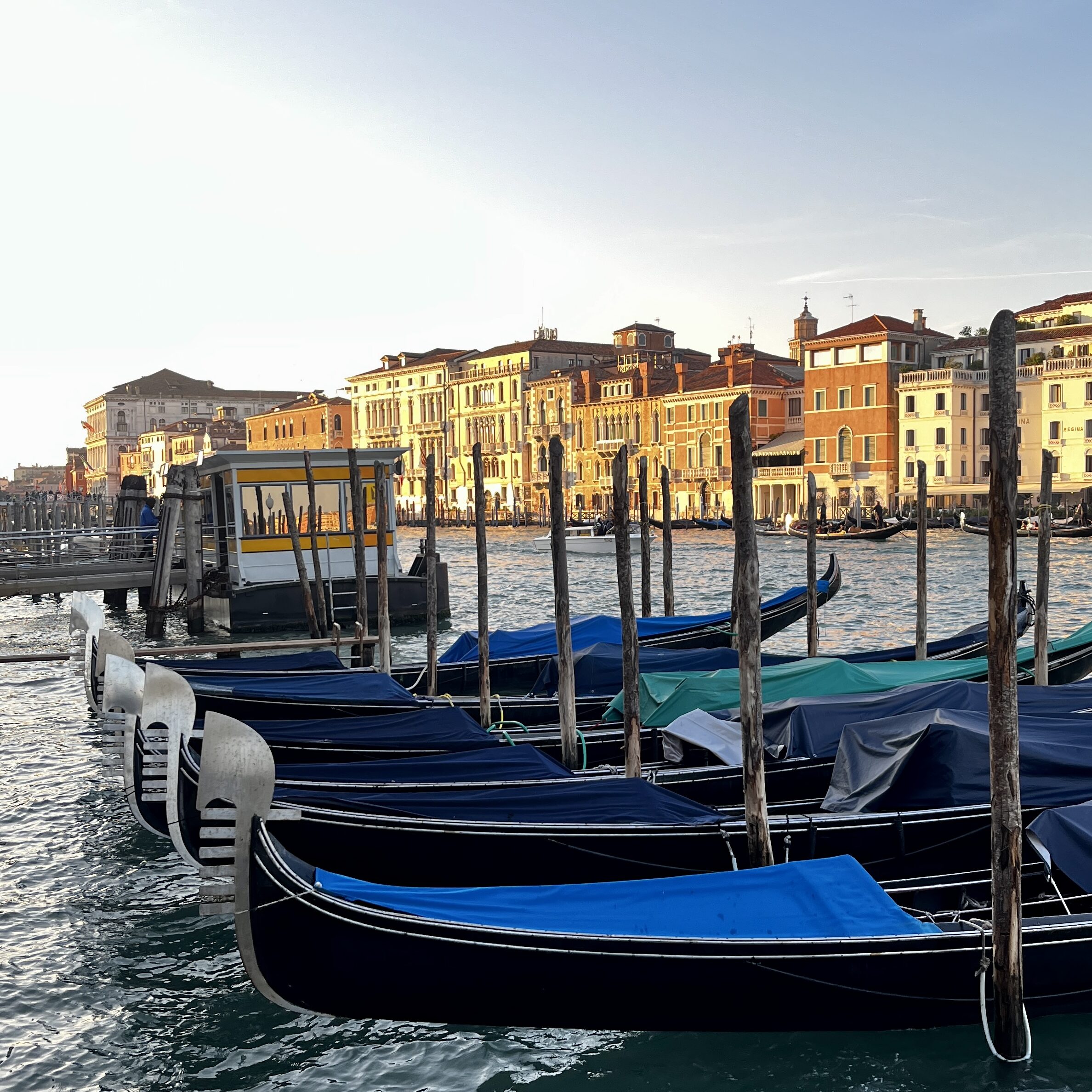
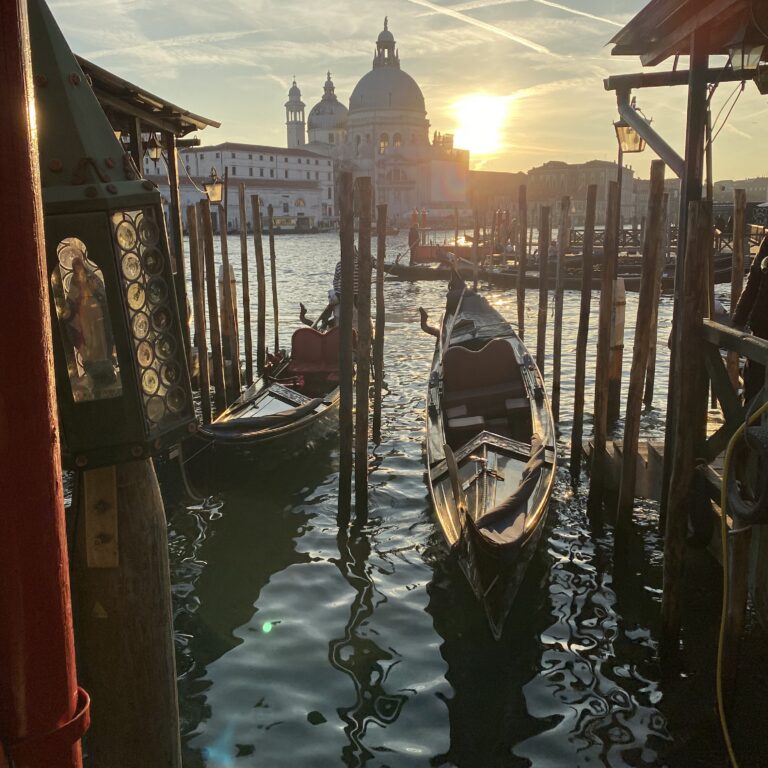
At the front of every gondola sits the ferro da prova: the curved metal ornament that rises from the water like a question mark. The six forward-pointing teeth represent the six sestieri. The single tooth pointing backwards symbolizes Giudecca. The curved metal blade in the shape of an S represents the bends of the Grand Canal or, according to another interpretation, the corno ducale, the Doge’s ceremonial headpiece.
San Marco: The Heart of the Serenissima
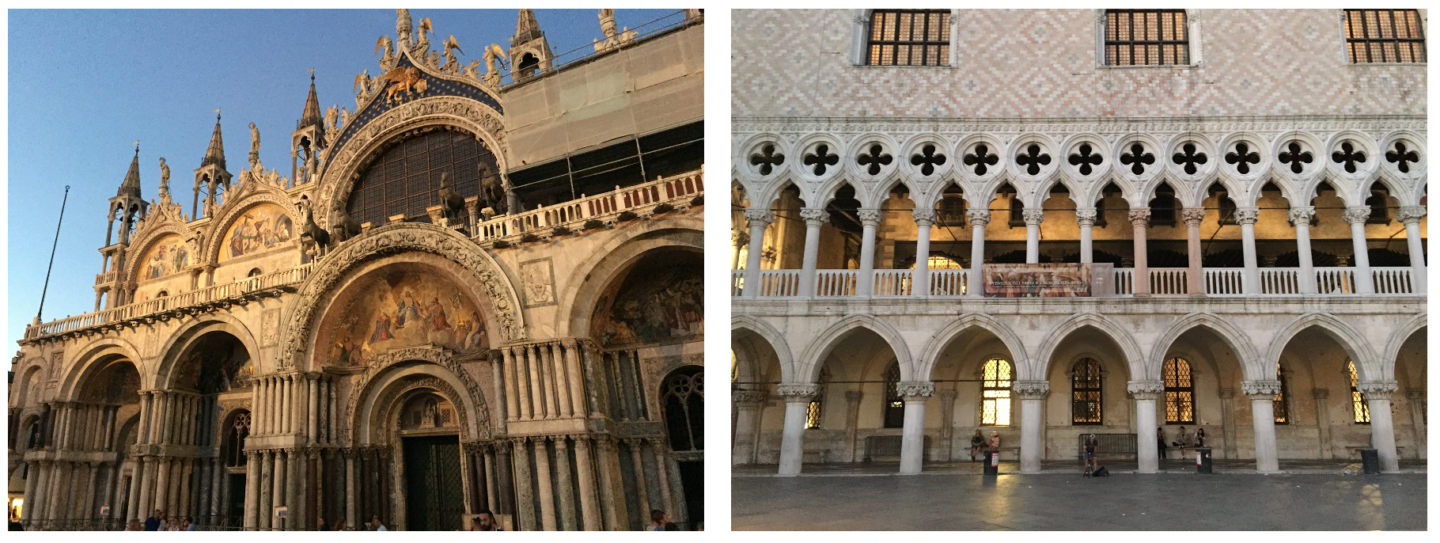
San Marco is the center of Venice. Here, St. Mark’s Basilica, the Doge’s Palace, the Procuratie (the city administration since the 13th century), and the Campanile form a remarkable ensemble. St. Mark’s Square is the only square in the city officially called a piazza. The other squares in Venice are called campi, from campo, meaning field, because they were originally not paved. Smaller squares are called campielli, while the small square in front of the Doge’s Palace facing the water is called the Piazzetta. When someone in Venice says they will meet “at the piazza,” they mean exactly one place: Piazza San Marco.
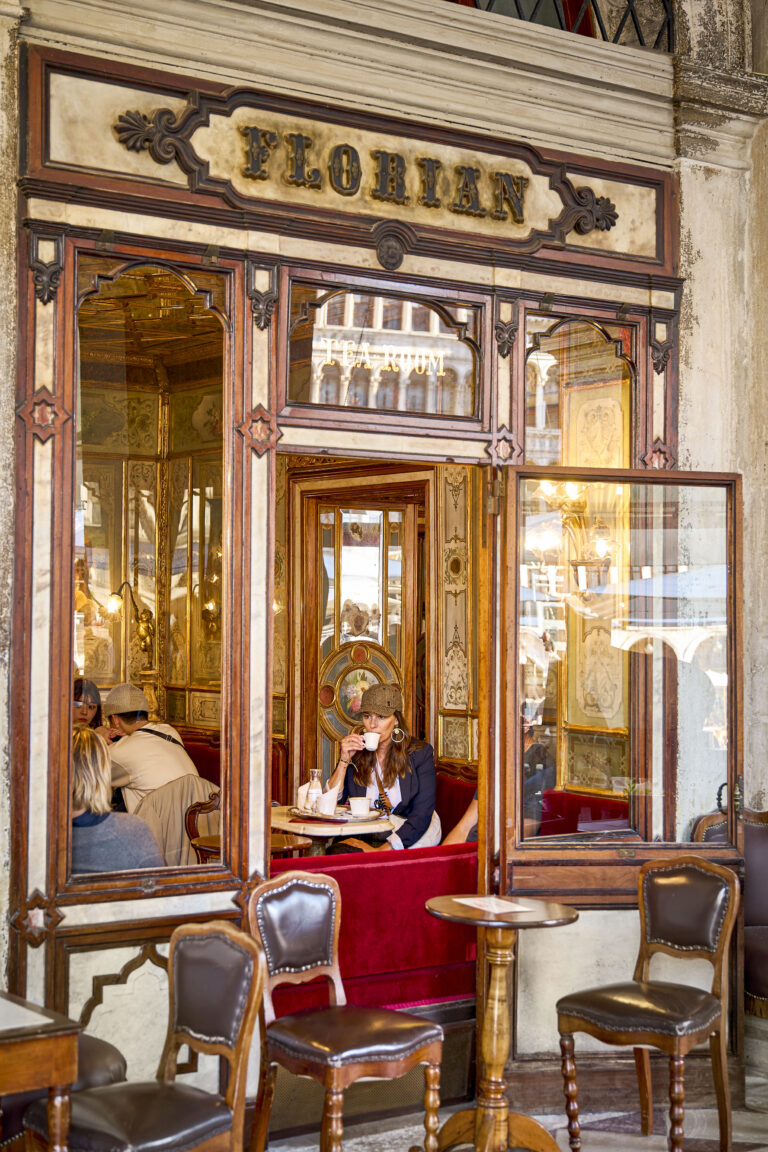
The three famous cafés on St. Mark’s Square, Caffè Florian, and opposite it Caffè Quadri and Caffè Lavena, are expensive. But sitting there is a wonderful experience, and a drink comes with little snacks, live music, and a touch of “theater” included. Napoleon already called the Piazza the most beautiful drawing room in Europe. My tip: on a mild summer evening after 10 p.m., the square becomes much quieter because the day tourists have left, and the atmosphere is magical.
Caffè Florian, Italy’s oldest coffee house, founded in 1720, has another special attraction: magnificent interiors in the Venetian style that make it worth visiting even in autumn or winter. Sitting inside, you almost expect Giacomo Casanova to walk through the door at any moment.
Isola di San Giorgio Maggiore, located opposite St. Mark’s Square across the Bacino di San Marco, also belongs to the San Marco district, although the small island lies directly next to Giudecca. The church and monastery regularly host contemporary art exhibitions. And there is more: two enormous and recently restored paintings by Tintoretto can be admired inside the church. The tower, although slightly lower, offers an almost even more beautiful view of the lagoon and the city than the famous Campanile on St. Mark’s Square.
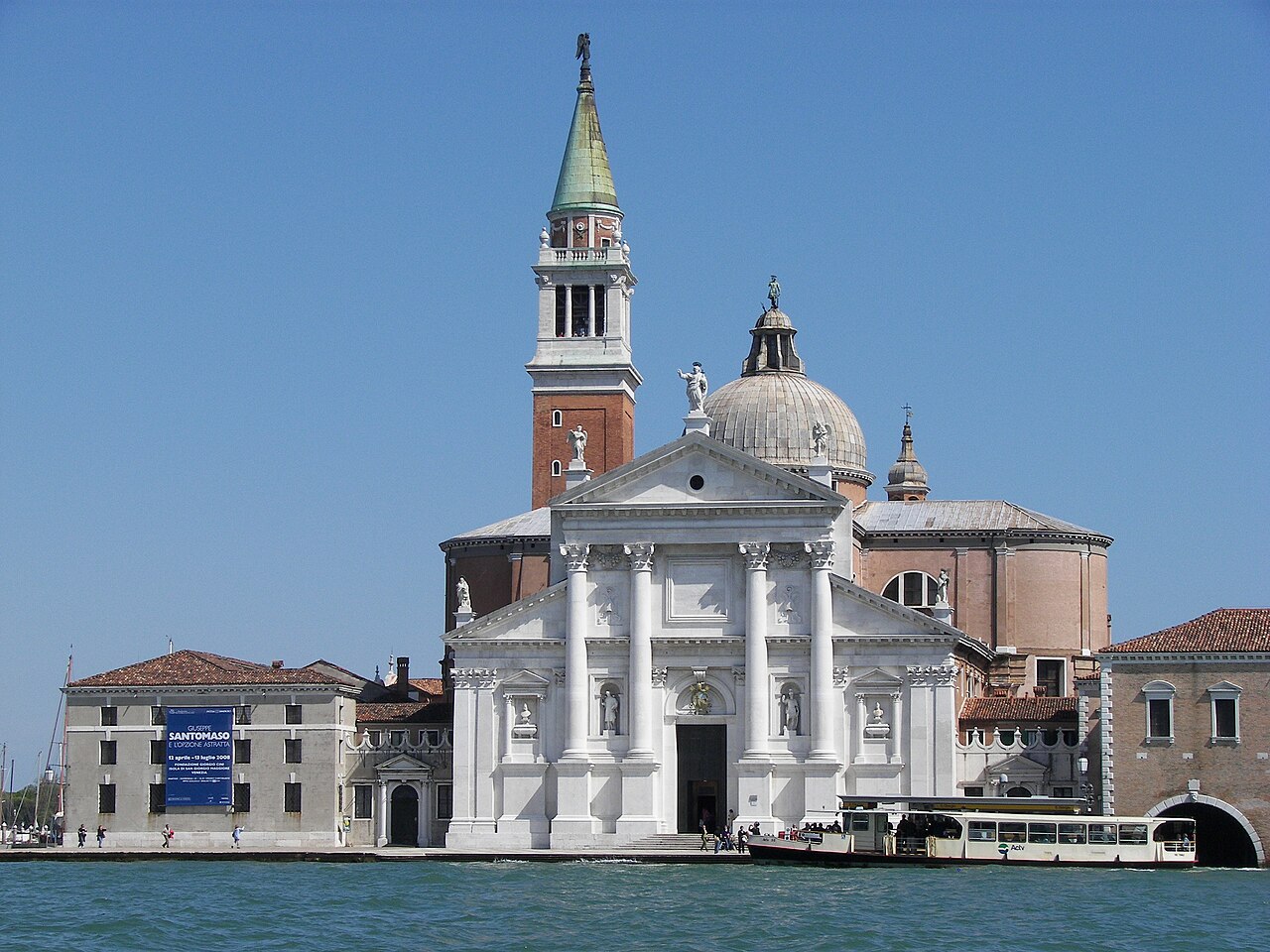
Today, San Marco is the most expensive and most touristy sestiere in the city. Hardly any local can still afford to live here. But it functions as the showcase of the Serenissima: loud, overwhelming, and one of the most photographed places in the world.
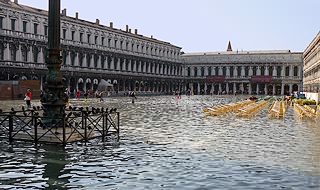
During high tide, Piazza San Marco used to regularly flood. It is the lowest point in Venice, and water pushes up through the drain covers onto the square. But more about acqua alta further below.
Museums: Museo Correr, Biblioteca Marciana, Palazzo Ducale (Doge’s Palace)
Highlights: St. Mark’s Basilica, Teatro La Fenice, San Giorgio Maggiore
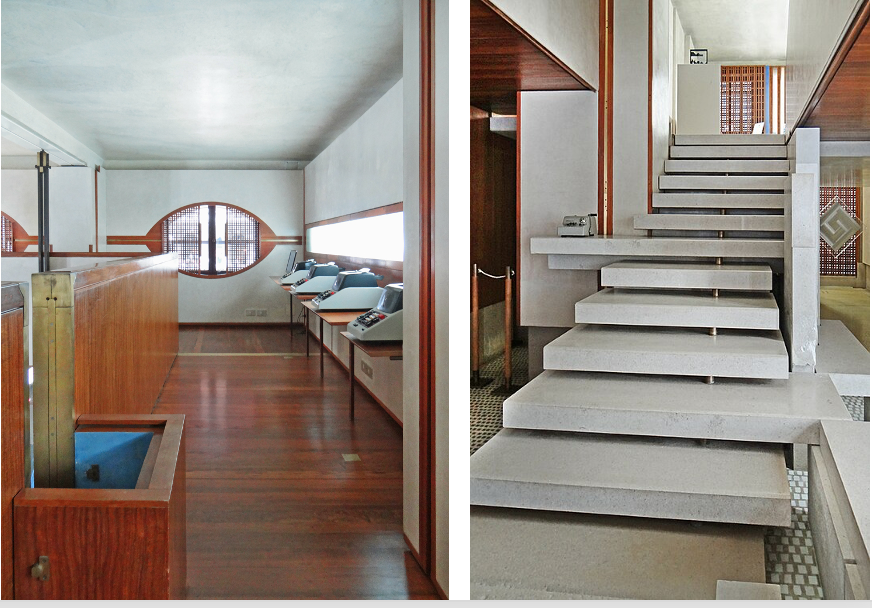
Secret tip: My favorite place on St. Mark’s Square is the Negozio Olivetti. The showroom was designed by Venetian architect Carlo Scarpa and is one of the city’s most beautiful examples of modern interior design. Today, it hosts changing exhibitions. Scarpa’s interior architecture is stunning, and admission is free.
Castello: The City’s Most Honest Face
Castello is the largest and most populated sestiere, and it is the part of Venice where the city bends itself the least. Here, children play soccer on the campi, older residents chat in front of their doorways, and both the hospital and FC Venezia’s stadium are located here. The island cemetery of San Michele also belongs to Castello.
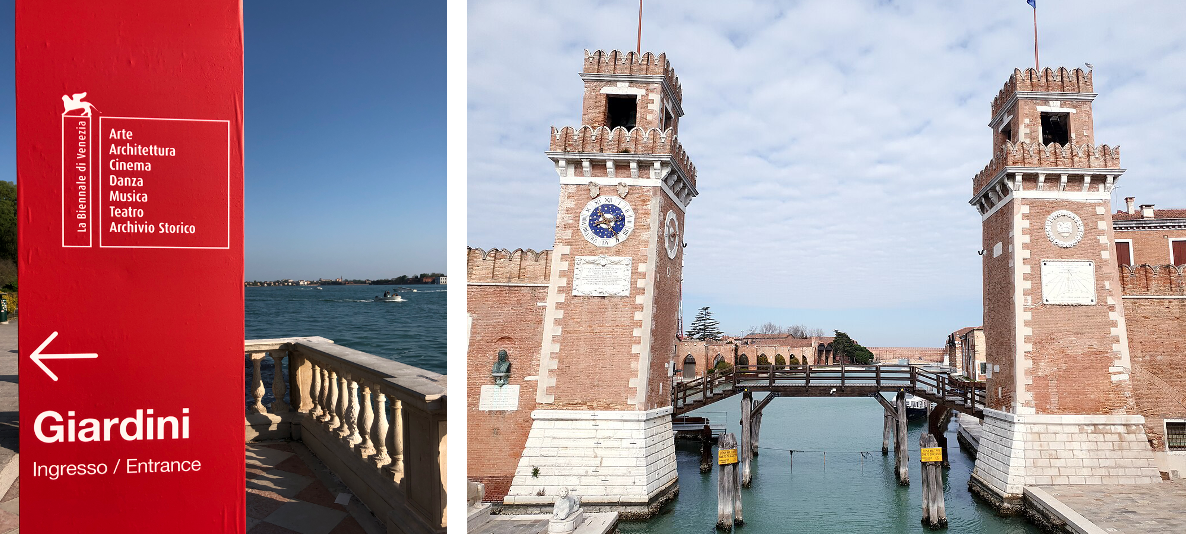
For art lovers, Castello is essential for one very specific reason: the Arsenale, once one of the largest shipyards in the world. In the 14th and 15th centuries, galleys were built here in an early version of assembly-line production, complete with weapons and equipment: an industrial achievement that amazed Europe at the time. Today, the area is mostly closed, but during the Biennale it opens its gates for six months of the year. During that time, the roughly 300-meter-long rope factory becomes one of the most impressive exhibition spaces of the main exhibition. The Giardini are also located in Castello, where the national pavilions of the Biennale stand alongside the large central pavilion. Anyone coming to Venice for the Art or Architecture Biennale will know Castello.
More about the Biennale: 2026, 2024, 2022.
Museums: Museo Storico Navale (Naval History Museum)
Highlight: The two Biennale venues Arsenale and Giardini
Cannaregio: Authenticity and a Dark Chapter
Anyone arriving at Santa Lucia train station enters Cannaregio. The northern district is another place where everyday Venetian life still exists. Here, you will not find grand palazzi, but rather simpler houses. The long fondamente along the canals are lined with many bars and restaurants.
The world’s oldest casino is located in the Palazzo Vendramin-Calergi on the Grand Canal. The Renaissance palace also has a connection to music history: Richard Wagner spent the final years of his life here.
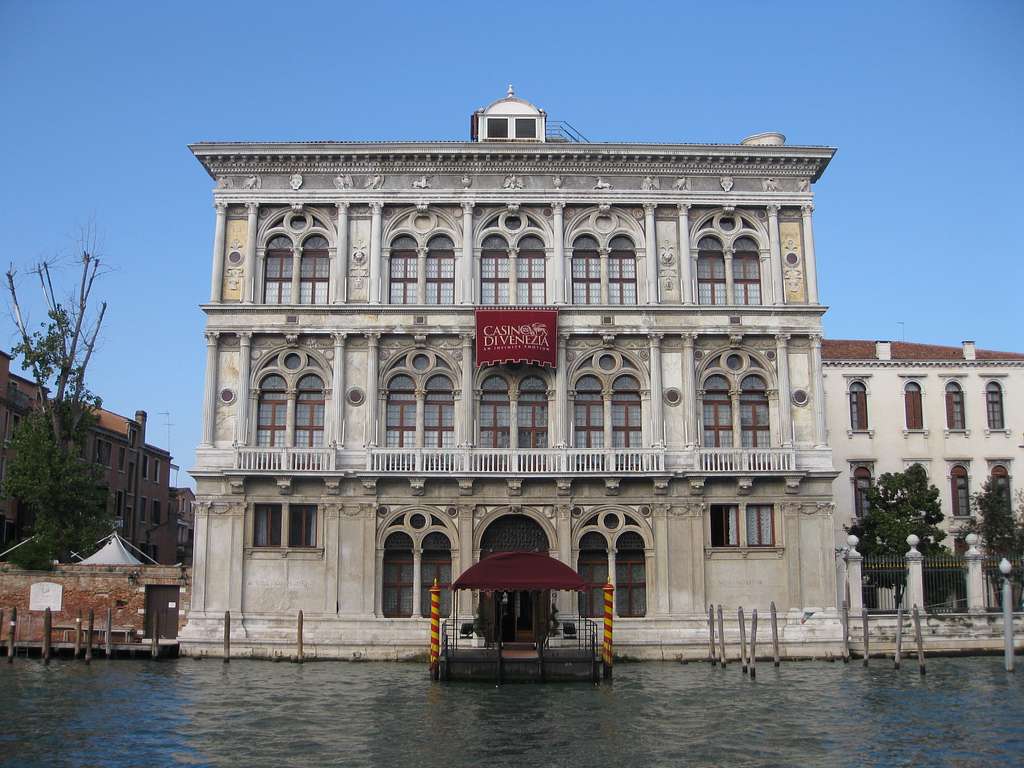
But Cannaregio also carries a difficult legacy: in 1516, the world’s first ghetto was established here. The word itself comes from Venetian: geto means foundry, because the area was located near the former iron foundry. For centuries, the Jewish community was restricted to the Campo del Ghetto Nuovo, locked in at night and controlled during the day. The Jewish Museum documents this history without softening it.
Museums: Museo Ebraico di Venezia (Jewish Ghetto Nuovo), Ca’ d’Oro, a Venetian Gothic palace housing an art museum
Highlight: Santa Maria dei Miracoli (an Early Renaissance church with marble decoration and Titian’s painting Madonna and Child)
Dorsoduro: Lots of Art and Lots of Students
The name means “hard back.” Dorsoduro stands on the firmest ground in the entire lagoon. This explains why so many important buildings are located here. The University Ca’ Foscari is based here, and Campo Santa Margherita is one of the liveliest squares in the city, especially after dark.
From an art perspective, Dorsoduro is also a heavyweight: the Gallerie dell’Accademia houses the largest collection of Venetian paintings, and the Peggy Guggenheim Collection is located in Peggy Guggenheim’s unfinished palazzo directly on the Grand Canal. The famous art collector had an excellent eye: she collected artists such as Jackson Pollock, Max Ernst, and Alexander Calder long before they became major names in art history.
On the terrace facing the Grand Canal stands Marino Marini’s bronze sculpture Angel of the City: a man on horseback whose rider’s erect penis did not appeal to everyone. The penis can actually be removed and, according to legend, was occasionally taken off when important guests visited.
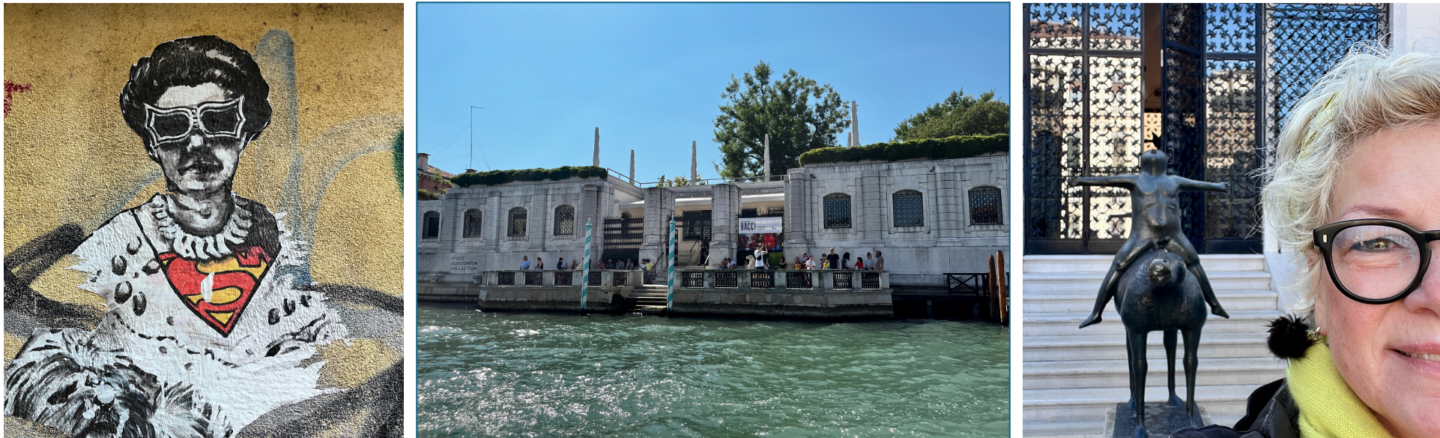
The Ponte dell’Accademia, the wooden bridge between San Marco and Dorsoduro, offers one of the most beautiful views in the city, overlooking perhaps the most magnificent section of the Grand Canal. The Basilica of Santa Maria della Salute, with its white dome at the entrance to the Grand Canal, can also be seen from the bridge. Construction began in 1631 as a votive church after the end of the plague, and today it is one of the most recognizable landmarks in Venice’s skyline.
Giudecca is not an official district of its own and belongs to Dorsoduro. It is separated from the main city by the wide Canale della Giudecca, where the gigantic cruise ships used to pass St. Mark’s Square. Fortunately, that is now forbidden. The narrow group of islands south of Venice’s historic center is only a few minutes away by boat and feels like a different city: no mass tourism, residential buildings from the 1960s and 70s.
Museums: Gallerie dell’Accademia, Peggy Guggenheim Collection
Highlight: Santa Maria della Salute, with paintings by Titian and Tintoretto
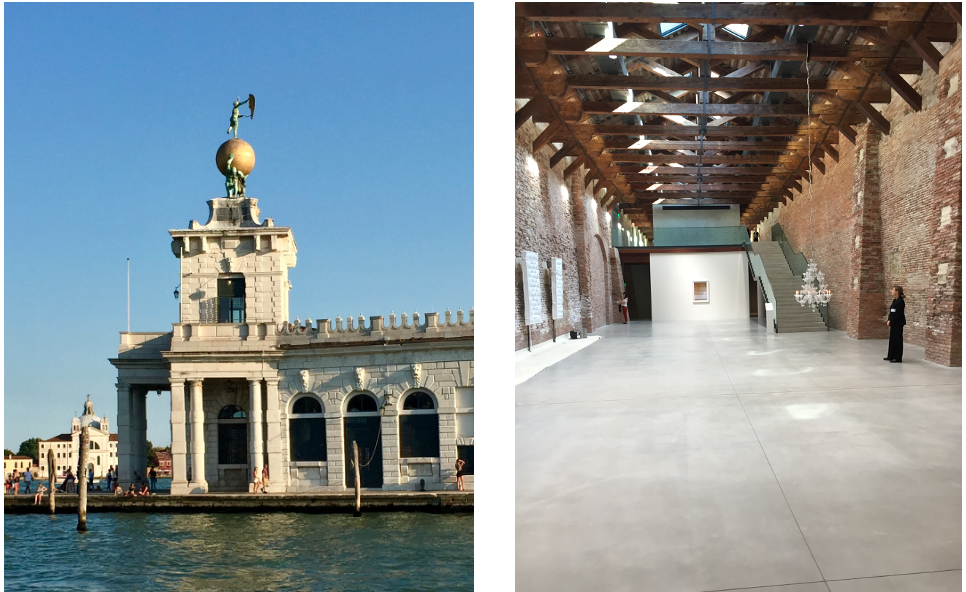
Tip for contemporary art: Punta della Dogana was Venice’s customs station for centuries, where arriving goods were inspected and taxed. Today, it houses the contemporary art collection of French billionaire François Pinault, who had the building carefully renovated by Japanese architect Tadao Ando.
San Polo: The Belly of Venice
San Polo is the smallest sestiere. This is where the commercial heart of the city beats: The Rialto Market has been Venice’s center of supply since the Middle Ages. The market opens every day except Sunday, and early in the morning it is filled with fish, vegetables, fruit, and spices.
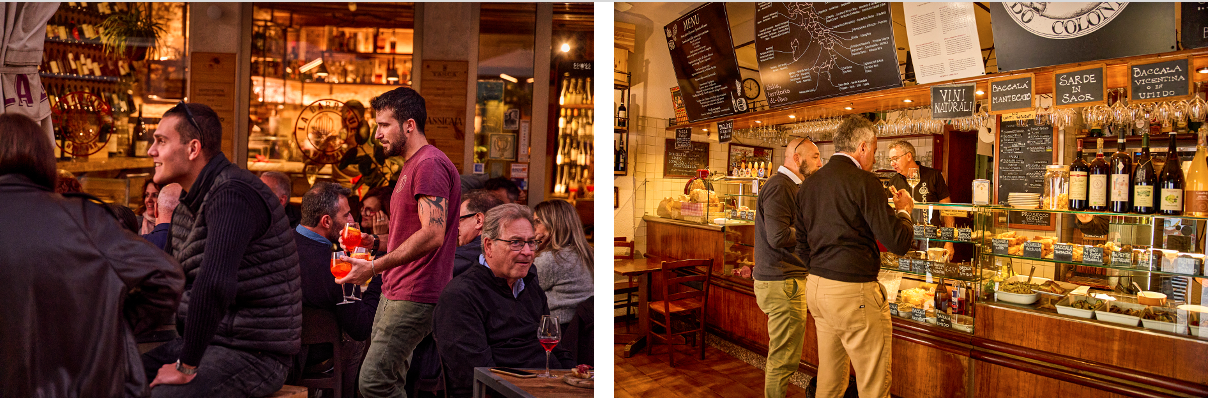
This area is also home to the largest number of bacari (traditional Venetian taverns), where locals drink their ombra. An ombra, actually the Italian word for shadow, refers in Venice to a small 0.1-liter glass of wine, supposedly once enjoyed in the shade of the Campanile, and today found at bacari counters all over the city. The perfect companion is a few cicchetti, delicious Venetian small bites created exactly for this kind of quick stop.
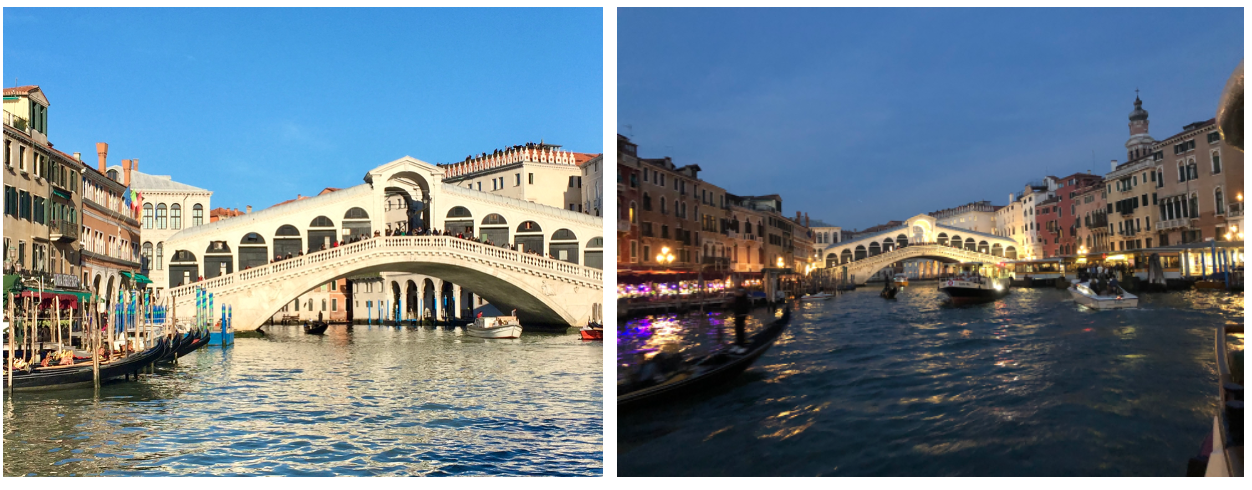
The Rialto Bridge connects San Polo with San Marco and was the only permanent crossing over the Grand Canal for centuries. Small shops line both sides of the bright white bridge, today mostly selling tourist souvenirs. It is an impressive stone masterpiece from the 16th century, but also completely overcrowded. Most of the time, it means waiting in line for the perfect photo spot at the front.
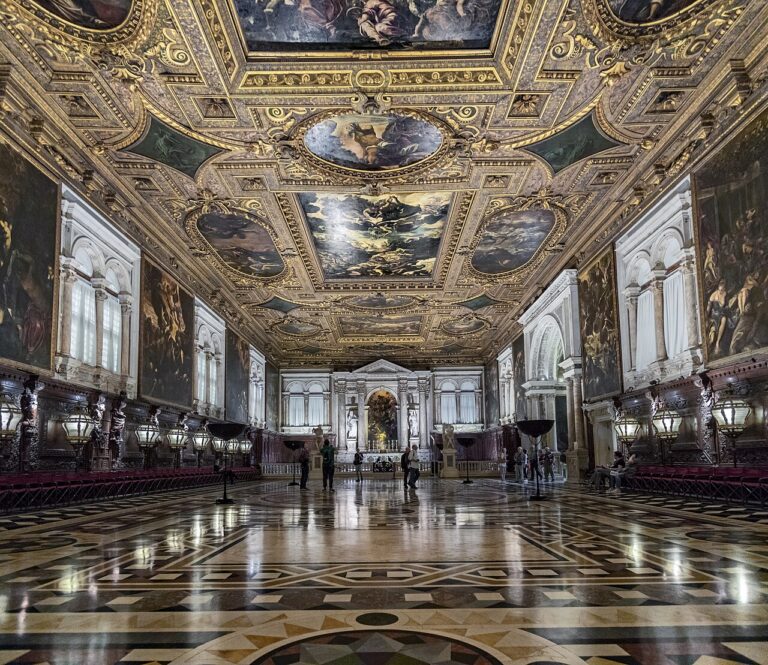
San Polo is also home to the Scuola Grande di San Rocco, where Tintoretto spent almost a quarter of a century decorating both walls and ceilings with paintings. To avoid getting a stiff neck while looking at Tintoretto’s ceiling paintings, there is a clever solution: a mirror provided for visitors that redirects the view downward and makes looking straight up unnecessary.
Other important representatives of Renaissance painting can be found in the church of Santa Maria Gloriosa dei Frari: Titian and Bellini.
Museums: Scuola Grande di San Rocco, with Tintoretto cycle
Highlight: Rialto Bridge
Santa Croce: The Entrance to the City
Santa Croce is often overlooked. Anyone arriving by car or bus ends up at Piazzale Roma, parks there, or gets off at the bus station, and from here the journey continues only on foot or by boat. Because of the Ponte della Libertà, the Bridge of Freedom, opened in 1933, Santa Croce is the only place where Venice can be reached or left by car or bus, which is why a large part of visitors and residents arrive here.
Most people, however, hurry straight on towards San Marco. Yet Santa Croce, located in the northwest of the city, is pleasantly quiet and far less crowded. The important ferry and cruise port is also located on the parking island of Tronchetto, which belongs to Santa Croce as well.
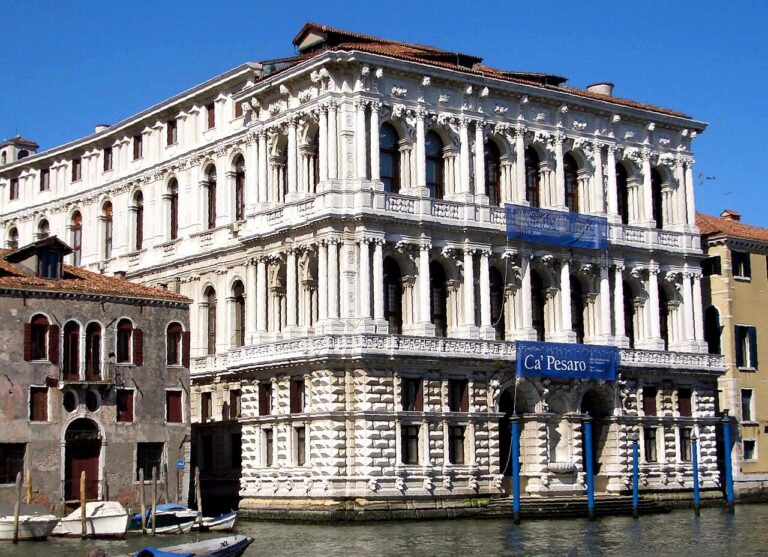
The impressive Palazzo Fontego dei Turchi on the Grand Canal now houses the Natural History Museum. The Baroque palace Ca’ Pesaro is home to a museum with changing exhibitions of contemporary art as well as the Museo d’Arte Orientale: an unusual and highly recommended combination.
Museums: Museo di Storia Naturale (Natural History Museum)
Highlight: Ca’ Pesaro on the Grand Canal
Fun Facts: Food, Water, and Saint Mark
When Art Comes to the Plate: Bellini and Carpaccio
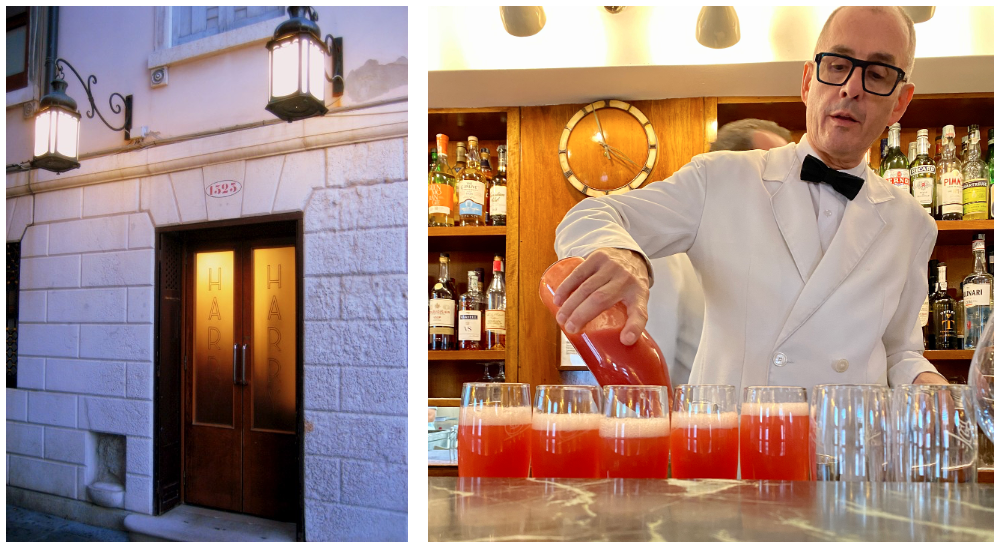
In Venice, even food and drinks carry the names of artists. They go back to Giuseppe Cipriani, the founder of the legendary Harry’s Bar. The Bellini, a cocktail made with Prosecco and peach purée, was named after the painter Giovanni Bellini because of the similar pink tones found in his paintings. Carpaccio, thinly sliced raw beef, owes its name to Vittore Carpaccio, whose strong reds and whites reminded Cipriani of exactly this dish.
“Venice Is in the Water, But Has No Water”
This is how the Venetian chronicler Marin Sanudo described the city around 1500. The lagoon is saltwater, and the Adriatic even more so. What looks like a fountain on the campi is not a fountain at all. These are the stone “heads” of underground cisterns, the so-called vere da pozzo, which the city used to collect as much precious rainwater as possible. The collected rainwater went through a natural purification process: it seeped through layers of sand and clay, allowing clean drinking water to be drawn from the cisterns.
Today, drinking water comes to Venice through pipes from the mainland. The beautifully carved wellheads made from Istrian stone, often decorated with lions, coats of arms, or saints, remain. Only the water beneath them is gone.
MOSE: The 7-Billion-Euro Project Against Flooding
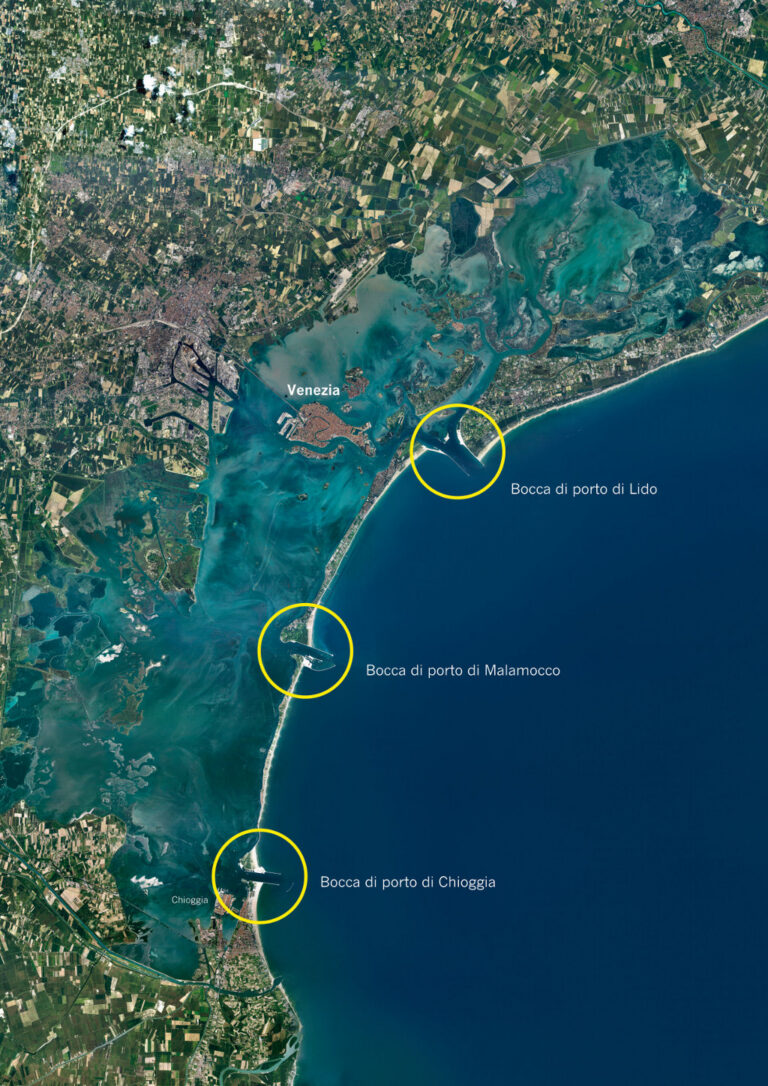
Acqua alta has been an old problem for centuries. The Venetians developed their own solutions long ago: wooden walkways along the main routes, boards placed in shop doorways, and brooms ready to sweep away the water once the tide went down.
Since October 2020, there has been a new answer: MOSE consists of enormous flood barriers at the three entrances to the lagoon. When water levels threaten to rise more than 110 centimeters above normal sea level, the barriers are lifted with compressed air and create a wall against the Adriatic. Since then, the gates have often been raised and have protected the city from flooding.
But the system is not without problems: because the barriers need to remain closed more frequently and for longer periods, the natural exchange of water is reduced, threatening the ecological balance of the lagoon. MOSE protects Venice while creating new challenges for the lagoon.
Smuggled in with Pork: How Saint Mark Came to Venice
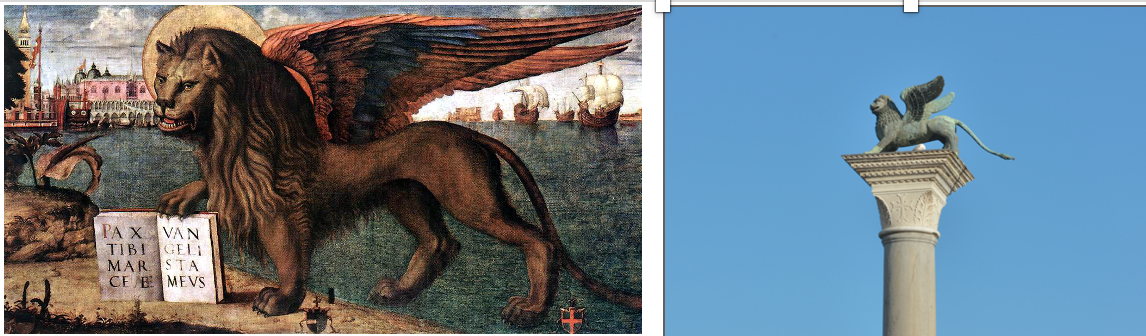
Speaking of symbols: the winged lion looking down from countless columns and façades across the city is the symbol of Saint Mark and therefore also of Venice itself. According to legend, the remains of the Evangelist were stolen from Alexandria in 828 and brought to Venice, hidden under pork so that Muslim customs officials would not inspect them too closely. Ever since, Mark has been the city’s patron saint. The Basilica of San Marco was built in his honor, and his lion still appears on flags, coats of arms, and even on the red carpet of the film festival on the Lido.
Conclusion
What can I say: Venice is so beautiful that you simply have to experience it yourself, again and again.Was soll ich sagen: Venedig ist so wunderschön, das muss einfach selbst erlebt werden, immer wieder.
Thank you for the review copies and the complimentary publicity:
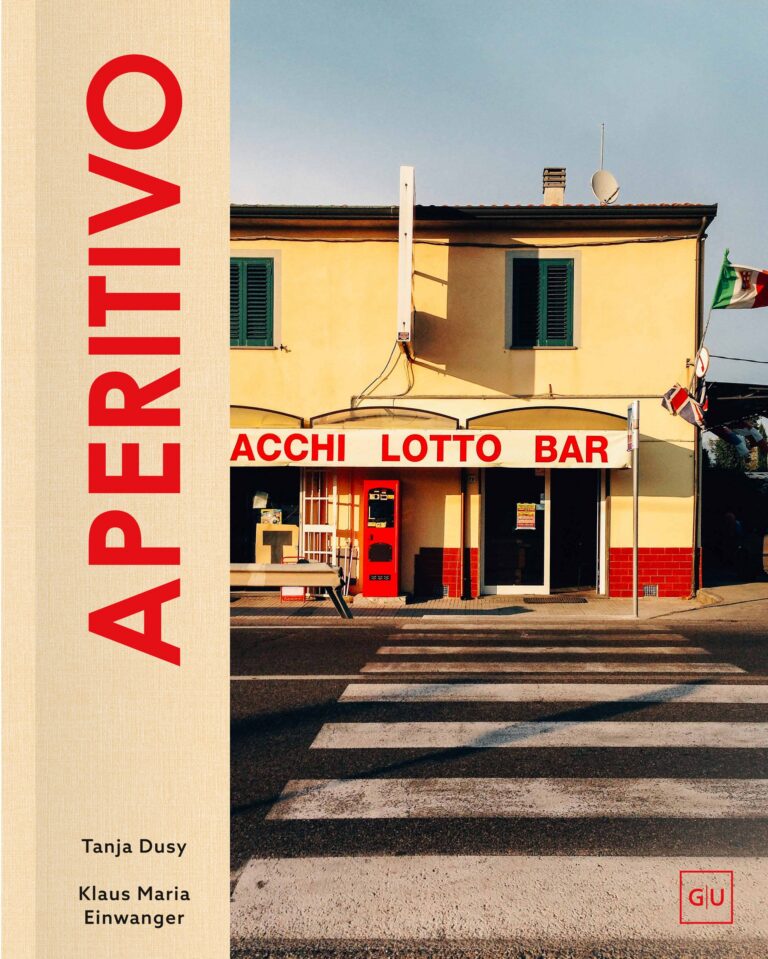
-> Wonderful tips for finding bacari and cichetti can be found in the recipe photo book Aperitivo by Tanja Dusy and Klaus Maria Einwanger. GU Verlag
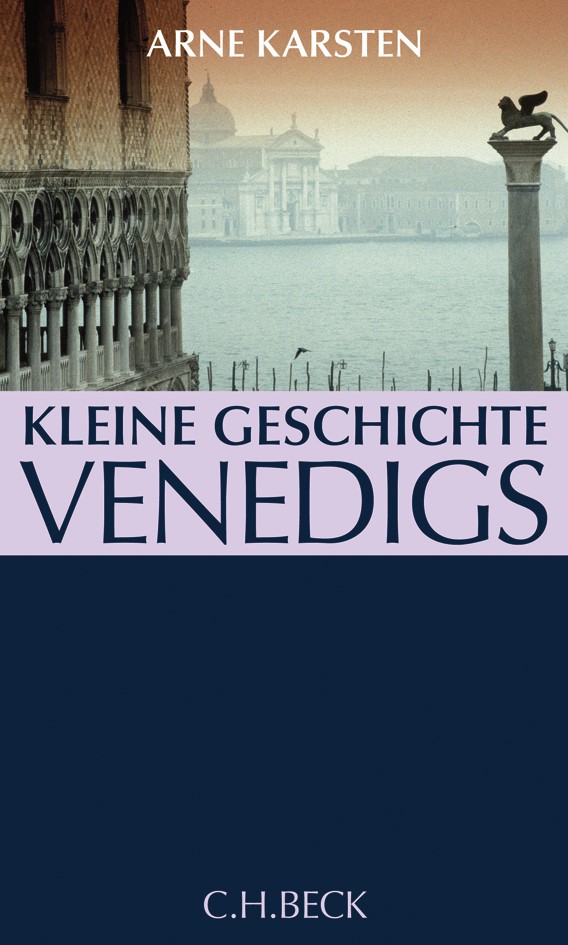
-> More about the history of Venice can be found in the book: Kleine Geschichte Venedigs by Arne Karsten, C.H. Beck
Venice: A Short Guide for Art Lovers – britta kadolsky
This text first appeared in German on this blog and was then translated into English with the help of the AI Claude, before being edited again by me.
Diesen Beitrag teilen:
Newsletter
Wenn ihr keinen Beitrag verpassen und über neue Artikel informiert werden möchtet, abonniert meinen Newsletter.
"Was kann Kunst" ist auch auf:
Wie Jenny Saville den Blick auf Frauenkörper sprengt
am 12.8.2026
Brancusi, der moderne Bildhauer
britta kadolsky am 13.7.2026
Venice Biennale 2026: My Five Favorite Pavilions
am 11.6.2026
Günther Uecker: Nagelkünstler, Weltreisender, stiller Poet
britta kadolsky am 10.5.2026
Yayoi Kusama: Dots That Never Stop
am 19.4.2026
Why Art Matters: The Political Power of Art and the Russian Pavilion Everyone Is Fighting Over
britta kadolsky am 30.3.2026
Thomas Bayrle erfindet das Große im Kleinen
britta kadolsky am 9.3.2026
Xenia Hausner: Schafft eine Bühne für selbstbestimmte Frauen
britta kadolsky am 16.2.2026
Ikonen der Kunstgeschichte
Saskia Wolf am 21.1.2026
Papier in der Kunst: Papier inspiriert Kunst über Jahrhunderte
britta kadolsky am 22.12.2025
Warum belebt Ophelia Kunst und Popkultur?
britta kadolsky am 17.11.2025
Fünf Graphic Novels, die Kunst neu erzählen
britta kadolsky am 3.11.2025
5 berühmte Künstlerpaare der Kunstgeschichte - Zwischen Passion und Untreue
Saskia Wolf am 18.10.2025
Max Liebermann – Maler des Lichts und des Lebens
britta kadolsky am 26.9.2025
Chaos, Körper, Farben: Die Kunst von Pipilotti Rist
britta kadolsky am 27.8.2025
CIA, Kunst und Kalter Krieg: Die documenta II 1959
britta kadolsky am 17.7.2025
Kunst beim Spazierengehen: 10 Skulpturen in Frankfurt
britta kadolsky am 2.7.2025
David Hockney - Zwischen Licht und Linie
britta kadolsky am 25.5.2025
Im Innern des Papiers – Skulpturen von Angela Glajcar
britta kadolsky am 7.5.2025
April, April: Die Kunst des Täuschens
britta kadolsky am 13.4.2025
Andreas Mühe – Im Banne des Zorns
britta kadolsky am 16.3.2025
Martin Kippenberger - Ein Künstler, der Wettsaufen und Punkmusik liebte
britta kadolsky am 18.2.2025
Die Zahl 100 in der Kunst: Symbolik und Bedeutung
britta kadolsky am 23.1.2025
Frauenpower: Künstlerinnen und Erfinderinnen
Saskia Wolf am 16.12.2024
Hans Haacke: Politische Kunst mit Tiefgang
britta kadolsky am 2.12.2024
Kunst unter Bäumen – der Internationale Waldkunstpfad in Darmstadt
Ruth Fühner am 10.11.2024
Blut, Fleisch, Kot: Ungewöhnliche Materialien in der Kunst:
britta kadolsky am 28.10.2024
Kunst und Kamera: Die vergessene Geschichte der Fotografinnen
britta kadolsky am 1.10.2024
Der Die dADa – Unordnung der Geschlechter
britta kadolsky am 5.9.2024
Der Skandal um den Kunstfälscher Beltracchi
britta kadolsky am 8.8.2024