Brancusi, the modern sculptor
Brancusi Reduces a Face to an Egg and Polishes Stone Until Only the Essence Remains
“Nothing can grow in the shadow of great trees.”
With that line, Constantin Brancusi left the Paris studio of Auguste Rodin in 1907. Rodin was the greatest sculptor of his day. Brancusi had worked there for only a few weeks.
I just saw the Brancusi exhibition at the Neue Nationalgalerie in Berlin. France treats him as a national saint. In Germany, he is not quite as well known yet.
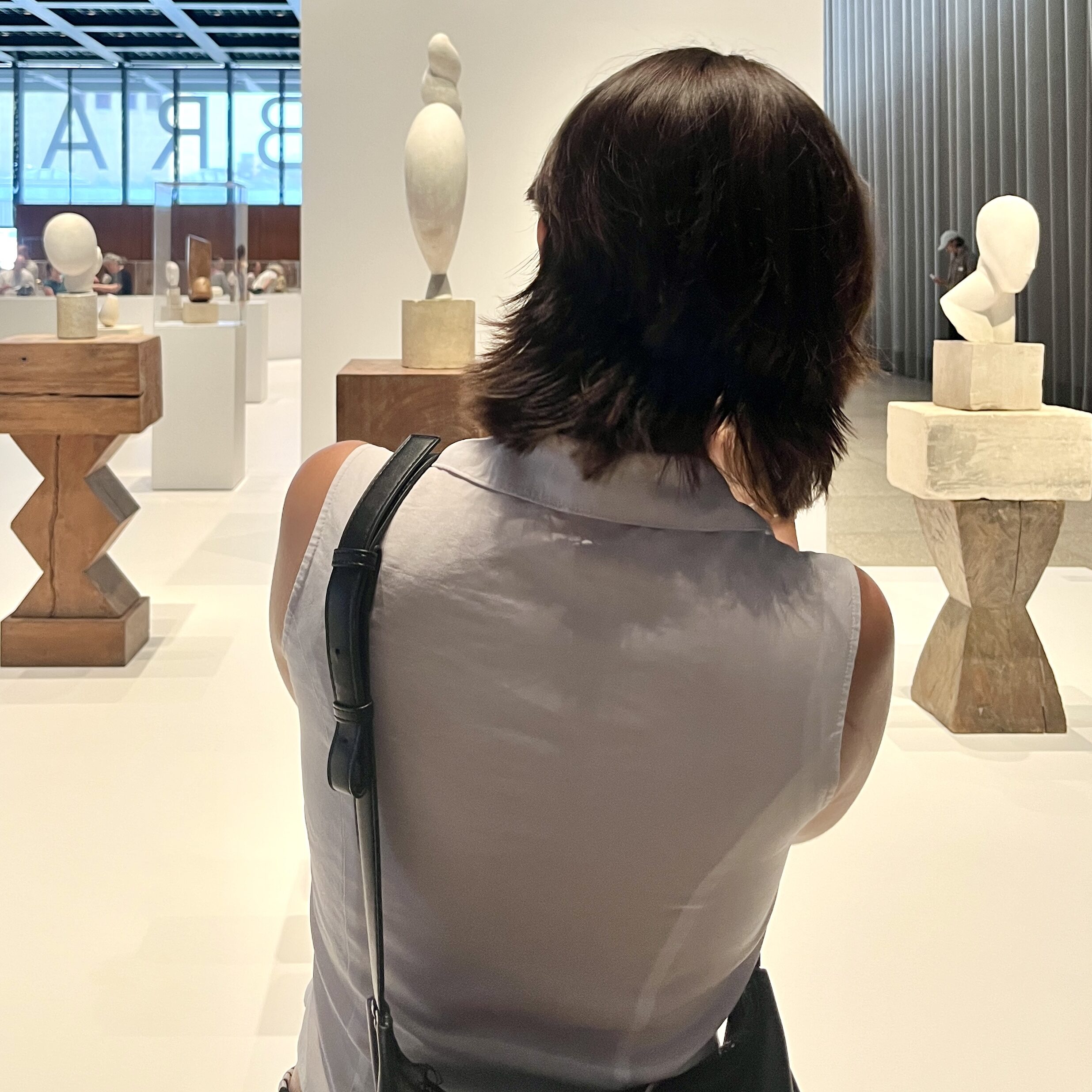
Brancusi, exhibition view, Neue Nationalgalerie, 2026, photo: britta kadolsky
Born in 1876 in a small village in Romania, he moved to Paris in 1904. After the break with Rodin, his sculpture turns into a story of radical reduction, away from realistic depiction and toward pure form. A few works from the show stayed with me, and every one of them packs a punch.
The Sleeping Muse and the Power of Reduction
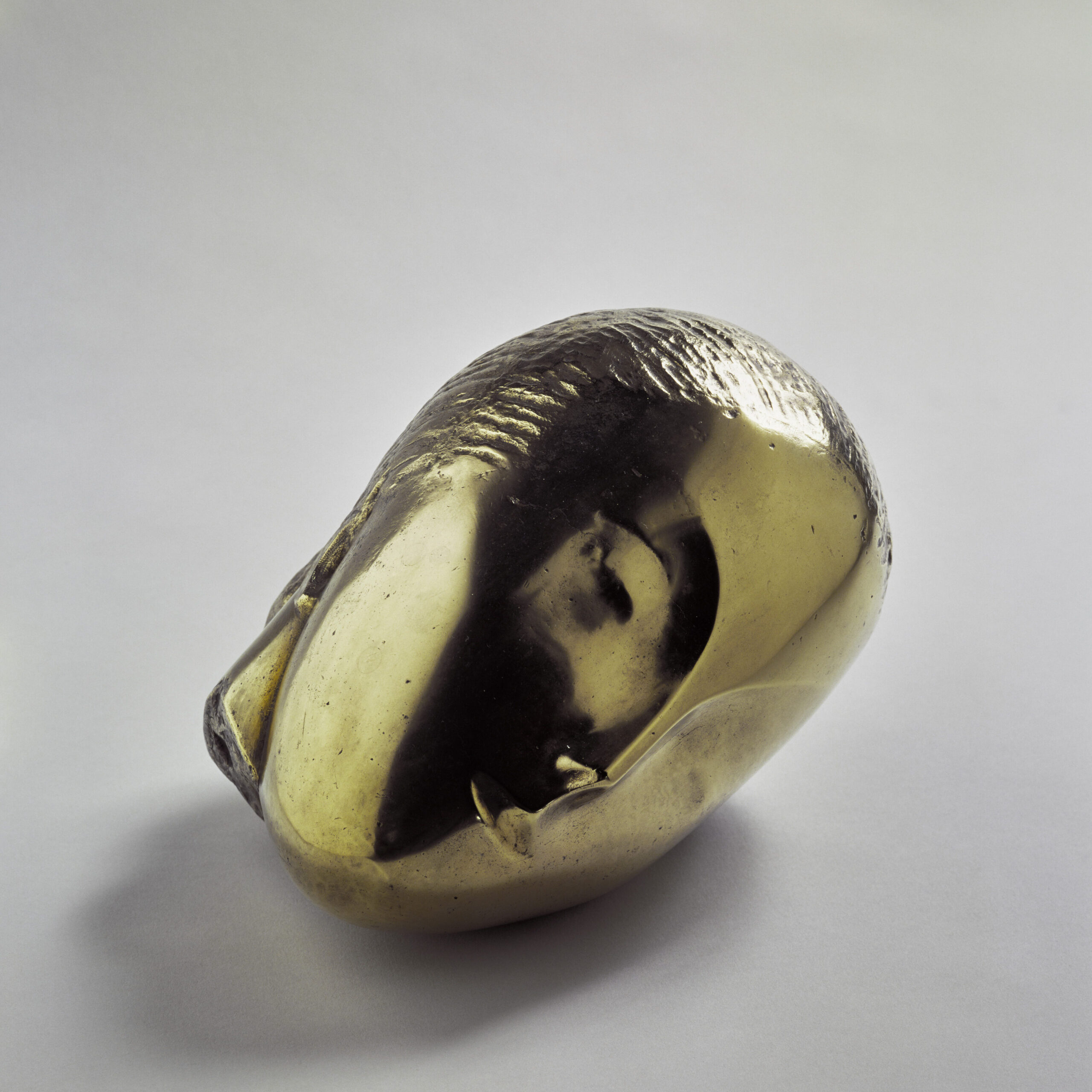
© Succession Brancusi – All rights reserved / VG Bild-Kunst, Bonn 2026
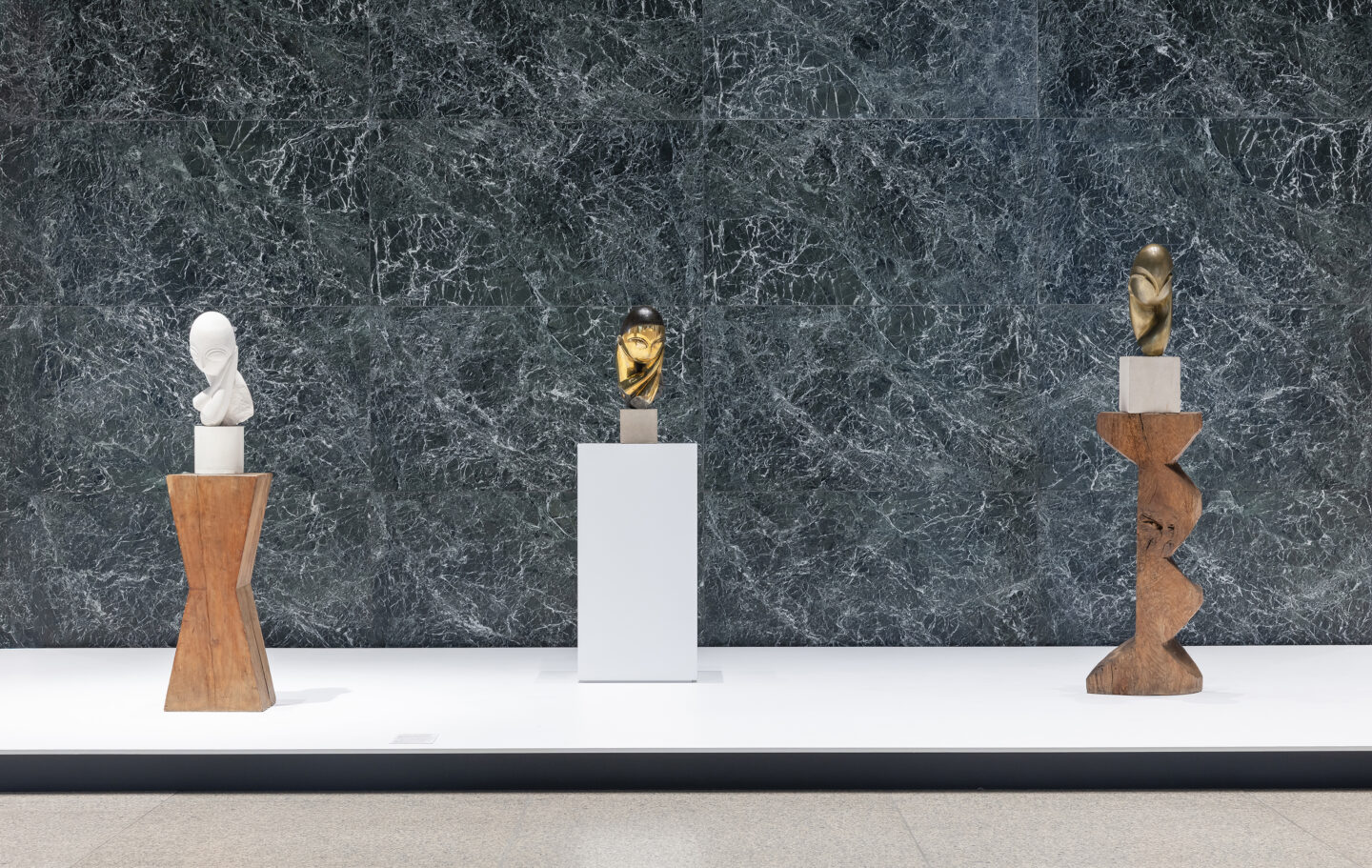
A smooth, oval form that barely recalls a face and yet is unmistakably one. A few incised lines are all that is left of the features. The body disappears entirely, and the head remains as a perfect, closed form. That is Brancusi’s La Muse endormie, the Sleeping Muse, lying in front of me in the exhibition.
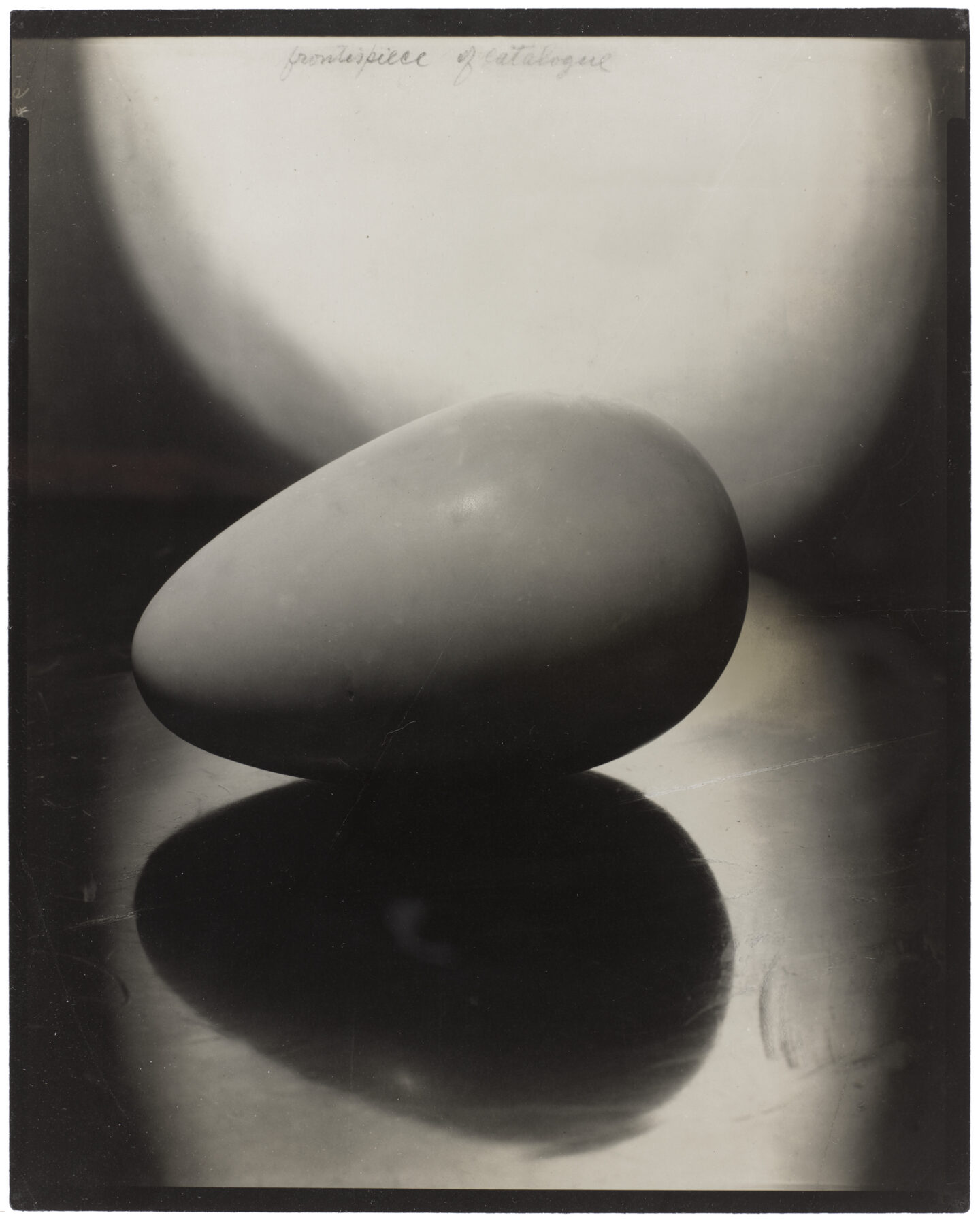
Baroness Renée Irana Frachon posed for it around 1909/1910. What began as a portrait, a reclining head with closed eyes, turns into something almost unrecognizable over several versions. In the exhibition, I could follow that development step by step: from a still clearly recognizable face that seems to emerge from a roughly hewn block of marble to a nearly abstract egg shape, polished to a high gloss.
© VG Bild-Kunst, Bonn 2026
That very egg becomes the founding motif of Brancusi’s entire oeuvre: Reduction at its best.
Later, he pushes it to the extreme once more under the title The Beginning of the World: a single, perfectly polished marble egg.
Princesse X: The Scandal That Didn’t Want to Be One
© Succession Brancusi – All rights reserved / VG Bild-Kunst, Bonn 2026
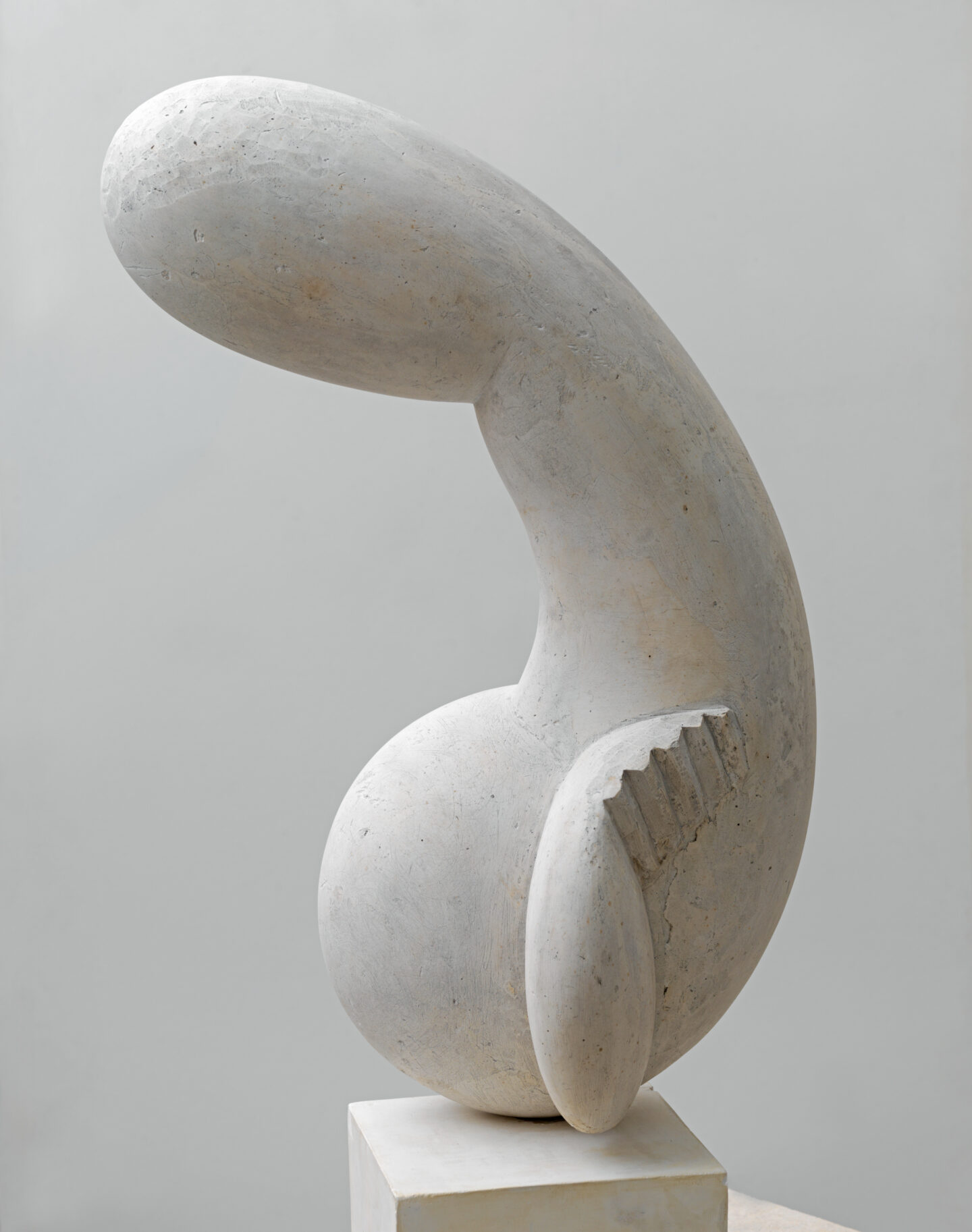
You see it right away: the slender, gleaming bronze form brings a phallus to mind. Princesse X is a portrait of Princess Marie Bonaparte, though. Brancusi shows her as a bust, as she looks at herself in a mirror, head tilted slightly, neck stretched down to the top of the chest. Brancusi’s sketches show this beautifully.
In 1920, it was supposed to appear at the Salon des Indépendants in Paris. At the preview, the painter Henri Matisse called out: “Look, a phallus.” The sculpture was pulled from the exhibition, out of fear it might come across as obscene.
For Brancusi, who said he had spent five years on the piece, this must have been a bitter blow. By his own account, he wanted to capture the essence of the feminine, not depict a sexual organ (let alone a male one!).
The Berlin show puts this contradiction on display on purpose, under the title “Ambiguity”: Is Princesse X the perfect reduction of the feminine to the symbolic, or simply a penis with good marketing? Berlin shows a plaster version of the piece, just 61 centimeters tall. Standing in front of it, I realized: Whatever I want to read into it, I can’t ignore the idea of an erect penis.
The Bird That Took the U.S. to Court
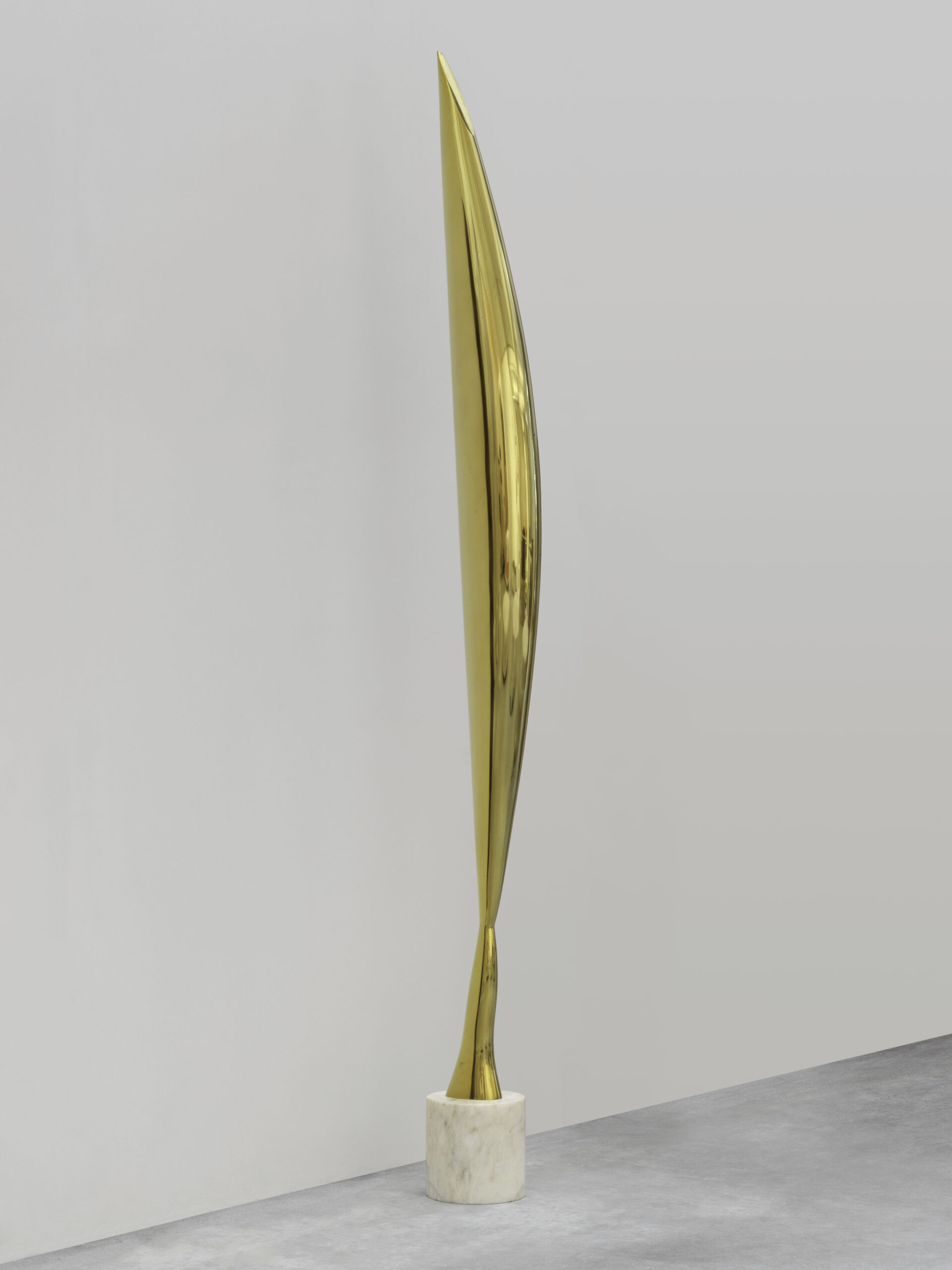
© Succession Brancusi – All rights reserved / VG Bild-Kunst, Bonn 2026
“That’s not a bird, that’s a piece of metal,” an American customs officer decided in 1926, and he demanded a forty percent import duty on Brancusi’s Bird in Space. That set off one of the most memorable art trials of the 20th century. A court had to settle, quite literally, what art is and whether it can still be art when it is abstract.
Brancusi’s best-known bird sculpture gleams: high-gloss, golden, slender, rising upward, with no anatomical detail left to hint at its subject. Brancusi wasn’t after feathers, wings, or a beak. He was after movement itself, the impulse that carries a bird upward. Over the years, he made sixteen versions of Bird in Space, in bronze, marble, and plaster.
The bronze version at the heart of the customs dispute traveled by steamship from Paris to New York for an exhibition curated by Marcel Duchamp. Under the law at the time, works of art could enter the country duty-free, everything else could not, and that is exactly what ignited the fight in court. The defense argued that a work of art does not have to imitate nature to be one. In 1928, the court ruled for Brancusi: It officially recognized Bird in Space as a work of art, duty-free, and the decision still stands as a precedent that abstraction is no obstacle to the definition of art: remarkable!
The Pedestal as Sculpture
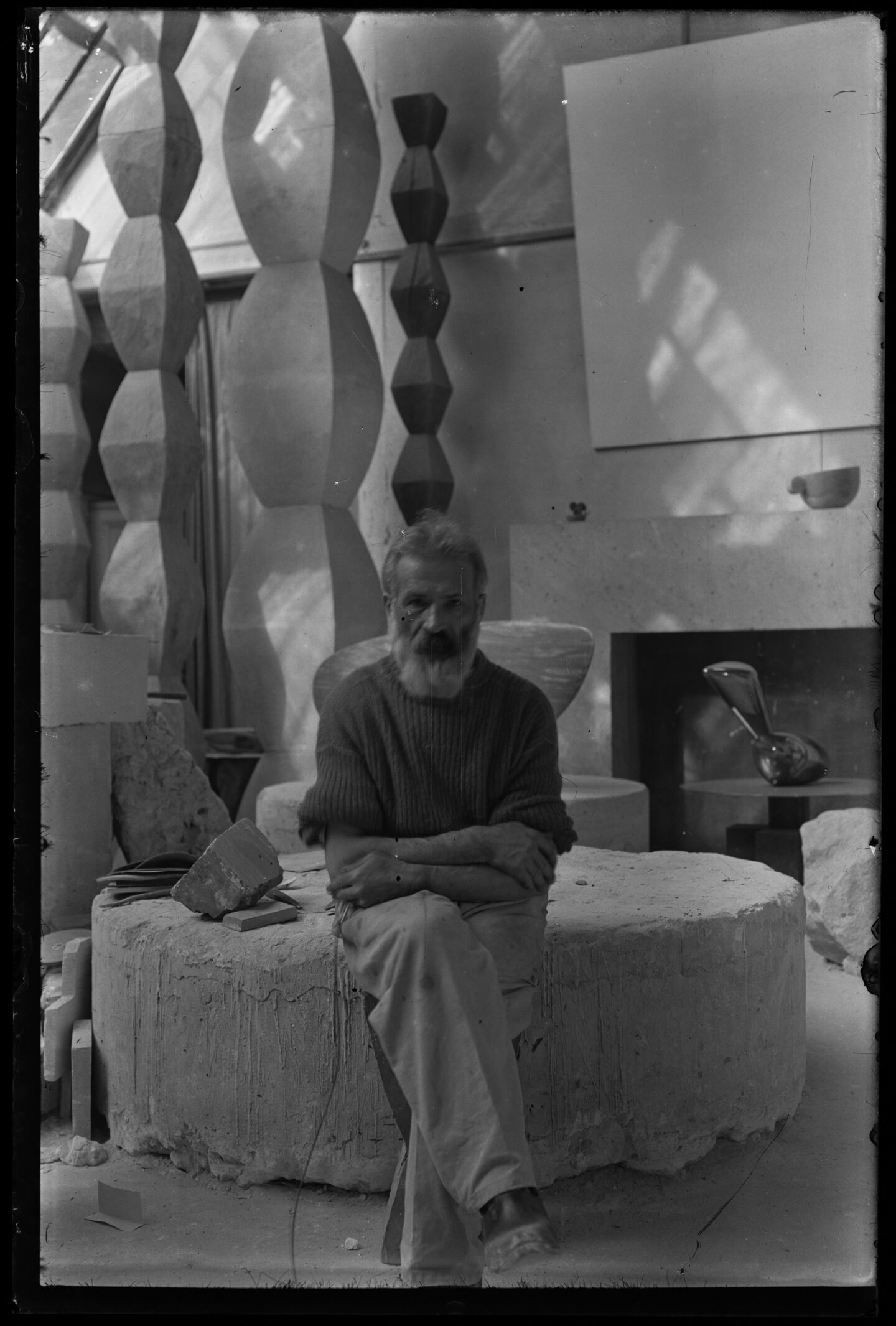
© Succession Brancusi – All rights reserved / VG Bild-Kunst, Bonn 2026
No sculptor before him took the pedestal as seriously as Brancusi did. For most of his contemporaries, it was a mere afterthought, a neutral support that simply lifts the actual sculpture. Brancusi, by contrast, designed his pedestals with the same care as the works standing on them, often in deliberate contrast to the material and form of the sculpture itself. Sometimes I could barely tell where the pedestal ended and the sculpture began, and that was apparently exactly his intention. A heavy block of stone can balance on a slim wooden foot. A slender, seemingly weightless form can rest on a massive base. That creates a tension between weight and lightness, and it is part of the work.
Decades of work on the pedestal led logically to one of his most important independent works: the Endless Column. He made it from 1918 on in numerous versions, sizes, and materials. The column consists of stacked, identically shaped trapezoidal modules. It is not truly endless, of course. But the strict repetition of the same form makes the principle clear, and it could continue without end.
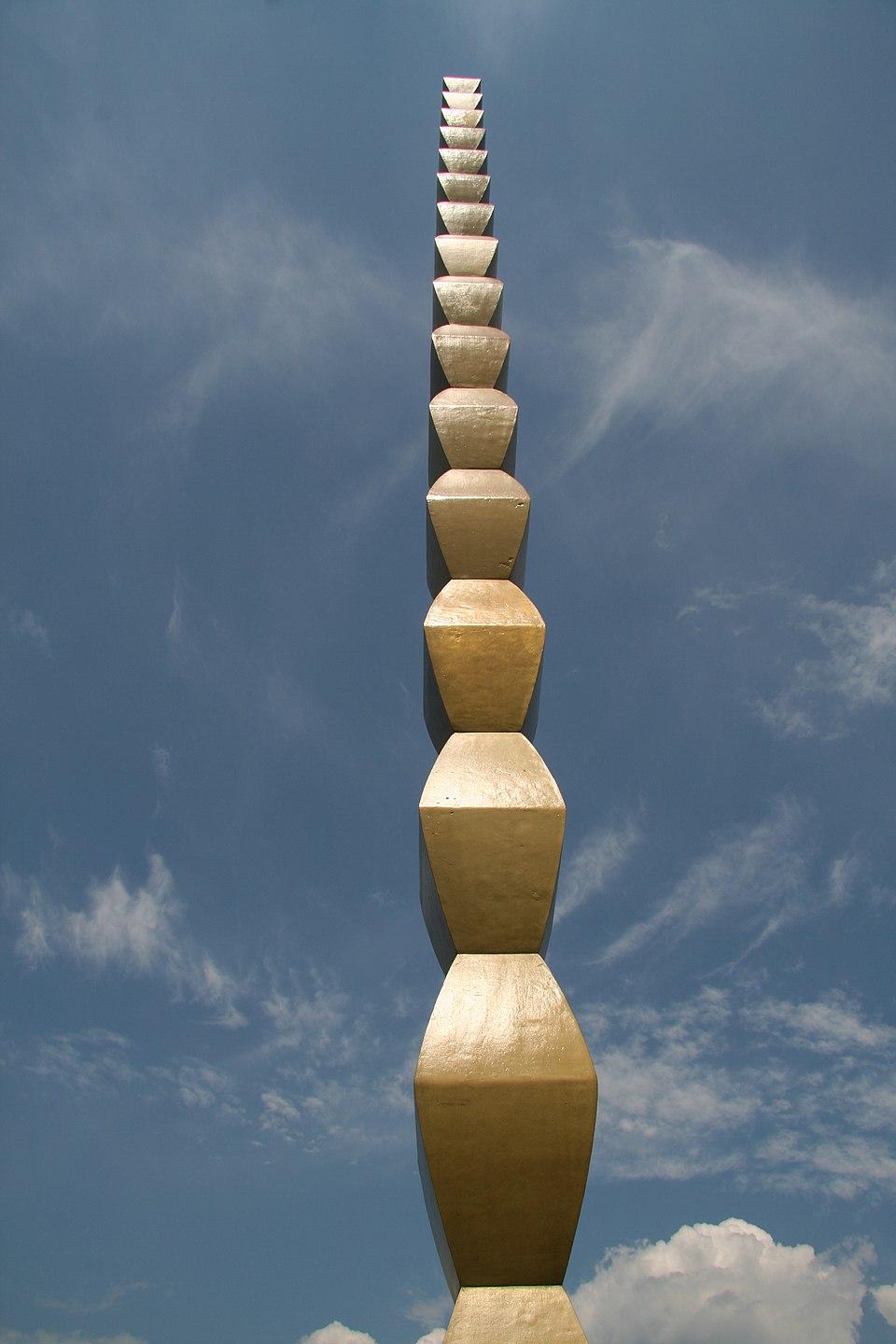
In Târgu Jiu, his Romanian hometown, a monumental version has stood since 1938. It is almost thirty meters tall.
The Film in the Studio: How Hard Sculpting Really Is
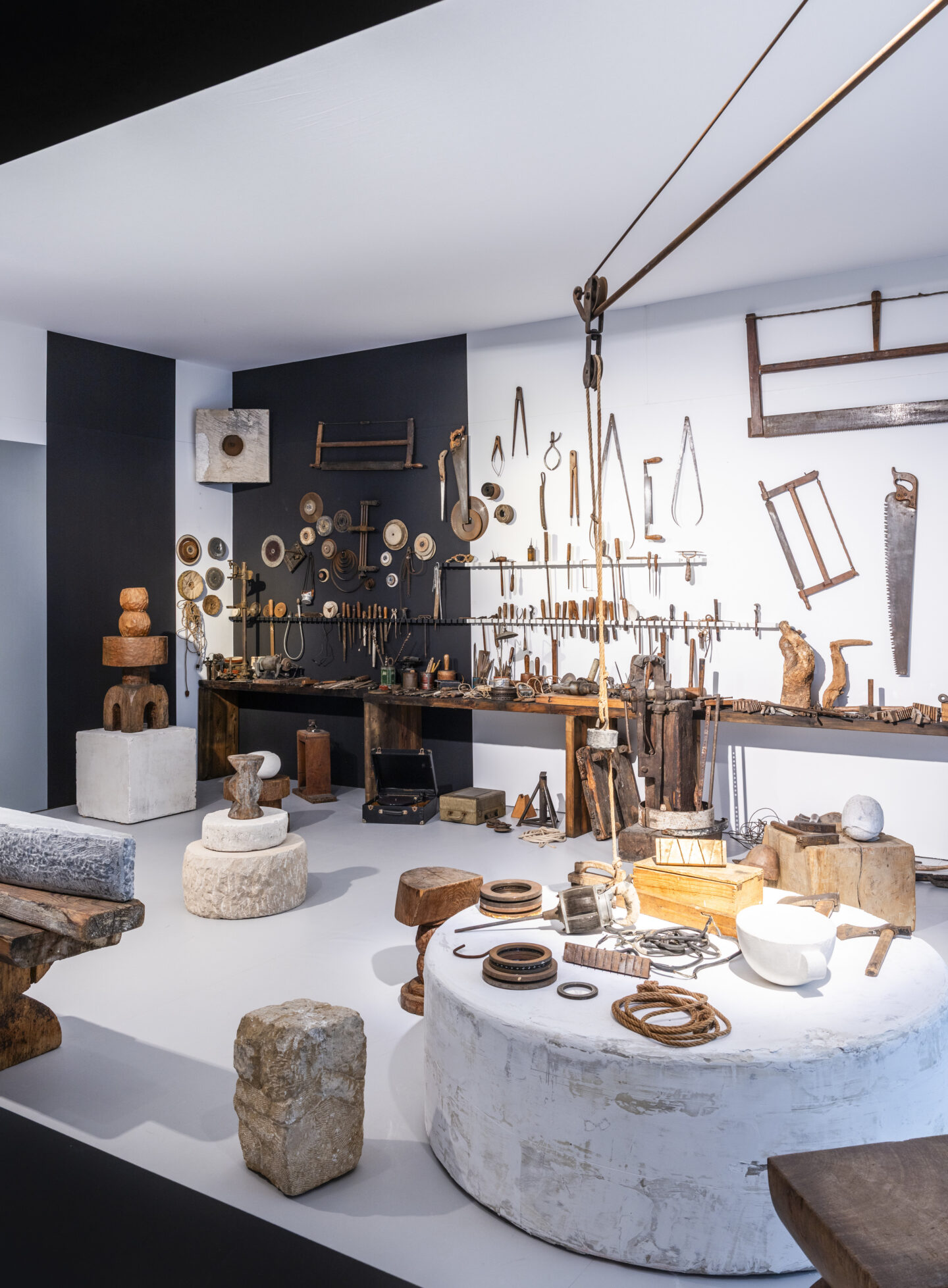
© Succession Brancusi – All rights reserved / VG Bild-Kunst, Bonn 2026
At the center of the exhibition stands a partial reconstruction of Brancusi’s Paris studio, with saws and other tools lined up neatly in a row. A film Brancusi shot himself plays alongside it and shows him at work. Nothing about the actual process is light or elegant. The work is unbelievably hard on the body and extremely dusty, because a fine white powder settles on everything: the tools, the floor, the sculptor himself.
A block of marble is unbelievably heavy. Anyone who wants to turn it into a form that seems to float has to start with brute force: sawing, rough carving, hollowing out, long before sanding and polishing even enter the picture. Brancusi insisted on doing as much as possible with his own hands, unlike Rodin. The fine, high-gloss surface he became famous for is the result of days of grueling physical labor in a cloud of dust. That contrast stayed with me most while watching the film: how this gray, dusty fight with the material finally produces a surface that shines like polished glass.
The Kiss: Brancusi vs. Rodin
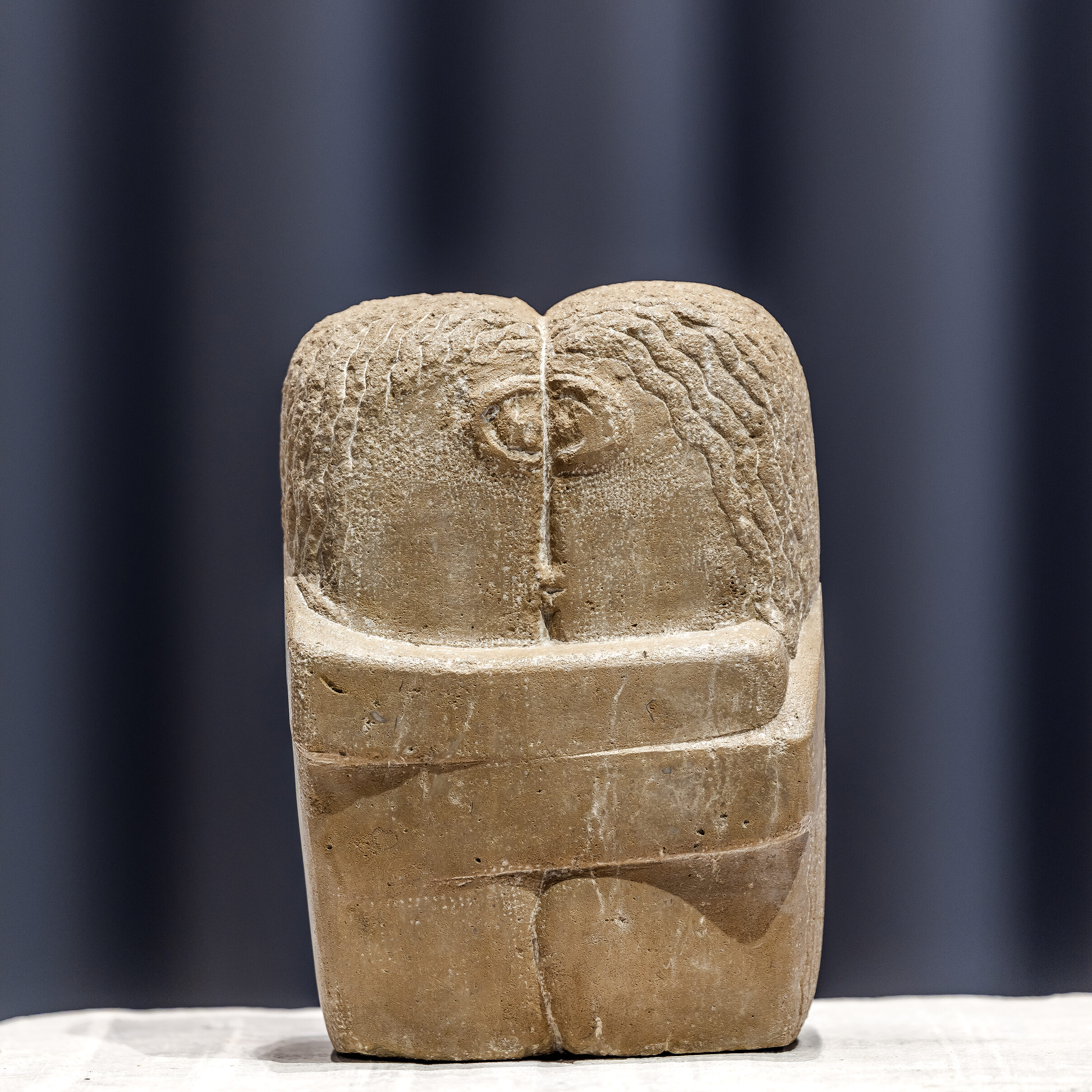
Two people kissing can hardly get any closer. The stone looks rough and heavy, and I feel the intimacy of the two figures. In front of me stands Brancusi’s Le Baiser, The Kiss. It is his first independent version, from 1907, shortly after he left Rodin’s studio.
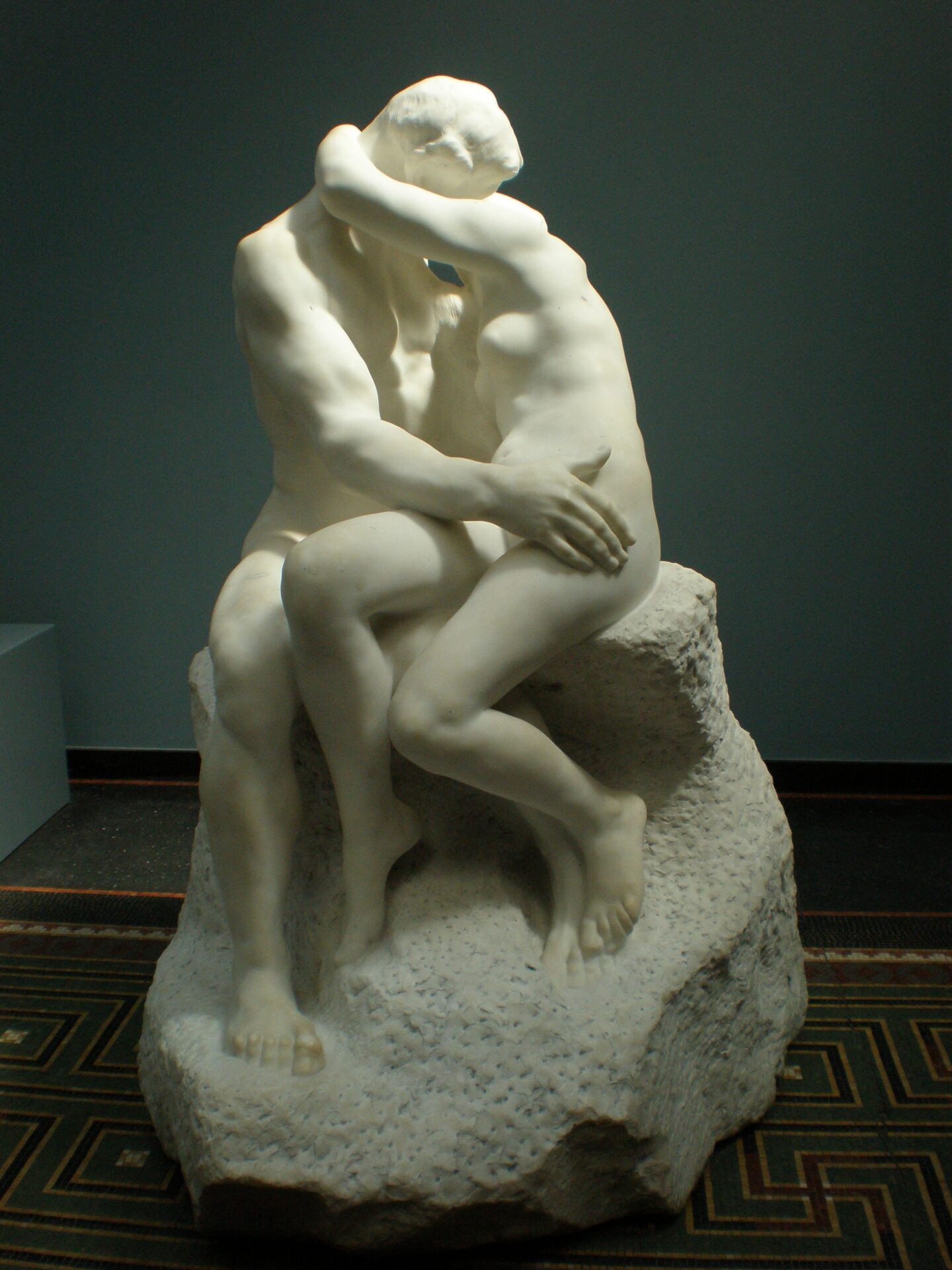
Rodin models ‘flesh’: two naturalistic bodies of polished marble, entwined, sensual, frozen mid-motion. Brancusi refuses exactly that. His block stays a block, roughly hewn, barely worked, with two figures only hinted at through a few incised lines for arms, hair, eyes. Instead of two bodies in motion, he shows a single, indissoluble unity, like two halves of one stone that belong together.
Their working methods set them apart, too: Rodin designed in clay and left the execution to assistants. Brancusi picked up the chisel himself. He kept coming back to this motif in particular: as a tomb monument in Montparnasse Cemetery and decades later as the monumental Gate of the Kiss in Târgu Jiu. And while Rodin’s kiss tells of erotic passion, Brancusi, by his own account, was after something else: equality, humanity, two beings becoming one whole.
© Succession Brancusi – All rights reserved / VG Bild-Kunst, Bonn 2026
Conclusion
Brancusi was born 150 years ago, and his sculptures still look astonishingly modern today. With him, the pure and reduced is never simply plain. It shows the essence: what remains of a face, a bird, a kiss once you take away everything superfluous.
That is where Brancusi’s power lies for me: His sculptures force you to look more slowly, more intensely. An egg, a column, a smooth block of stone: that sounds like little, and it is everything.
By the way, there are two versions of how to pronounce Brancusi’s name. In Romania, his name carries special characters above the â and below the ș, which makes it sound like “Brankoosh.” Once in Paris, he dropped these marks and simply wrote his name Brancusi from then on, which shifted the pronunciation, too: soft and French, more like “Brankoozee.”
Brancusi, Neue Nationalgalerie Berlin, the exhibition ran in 2026.
© Succession Brancusi – All rights reserved / VG Bild-Kunst, Bonn 2026
You might also be interested in:
- Günther Uecker made sculptures, too: with nails
- Maurizio Cattelan makes scandalous sculptures
- The wonderful figurative sculptures of Stephan Balkenhol
Brancusi, the modern sculptor – britta kadolsky
Diesen Beitrag teilen:
Newsletter
Wenn ihr keinen Beitrag verpassen und über neue Artikel informiert werden möchtet, abonniert meinen Newsletter.
"Was kann Kunst" ist auch auf:
Glasstress 2026: An Art Star Lineup at Berengo That Nobody Sees
am 3.10.2026
Felix Gonzalez-Torres writes love into everyday things
am 14.9.2026
How Jenny Saville challenges the way we look at women's bodies
am 12.8.2026
Venice: A Short Guide for Art Lovers
britta kadolsky am 23.6.2026
Venice Biennale 2026: My Five Favorite Pavilions
am 11.6.2026
Günther Uecker: Nagelkünstler, Weltreisender, stiller Poet
britta kadolsky am 10.5.2026
Yayoi Kusama: Dots That Never Stop
am 19.4.2026
Why Art Matters: The Political Power of Art and the Russian Pavilion Everyone Is Fighting Over
britta kadolsky am 30.3.2026
Thomas Bayrle erfindet das Große im Kleinen
britta kadolsky am 9.3.2026
Xenia Hausner: Schafft eine Bühne für selbstbestimmte Frauen
britta kadolsky am 16.2.2026
Ikonen der Kunstgeschichte
Saskia Wolf am 21.1.2026
Papier in der Kunst: Papier inspiriert Kunst über Jahrhunderte
britta kadolsky am 22.12.2025
Warum belebt Ophelia Kunst und Popkultur?
britta kadolsky am 17.11.2025
Fünf Graphic Novels, die Kunst neu erzählen
britta kadolsky am 3.11.2025
5 berühmte Künstlerpaare der Kunstgeschichte - Zwischen Passion und Untreue
Saskia Wolf am 18.10.2025
Max Liebermann – Maler des Lichts und des Lebens
britta kadolsky am 26.9.2025
Chaos, Körper, Farben: Die Kunst von Pipilotti Rist
britta kadolsky am 27.8.2025
CIA, Art, and the Cold War: documenta II as a Political Stage
am 17.7.2025
Kunst beim Spazierengehen: 10 Skulpturen in Frankfurt
britta kadolsky am 2.7.2025
David Hockney - Zwischen Licht und Linie
britta kadolsky am 25.5.2025
Im Innern des Papiers – Skulpturen von Angela Glajcar
britta kadolsky am 7.5.2025
April, April: Die Kunst des Täuschens
britta kadolsky am 13.4.2025
Andreas Mühe – Im Banne des Zorns
britta kadolsky am 16.3.2025
Martin Kippenberger - Ein Künstler, der Wettsaufen und Punkmusik liebte
britta kadolsky am 18.2.2025
Die Zahl 100 in der Kunst: Symbolik und Bedeutung
britta kadolsky am 23.1.2025
Frauenpower: Künstlerinnen und Erfinderinnen
Saskia Wolf am 16.12.2024
Hans Haacke: Politische Kunst mit Tiefgang
britta kadolsky am 2.12.2024
Kunst unter Bäumen – der Internationale Waldkunstpfad in Darmstadt
Ruth Fühner am 10.11.2024
Blut, Fleisch, Kot: Ungewöhnliche Materialien in der Kunst:
britta kadolsky am 28.10.2024
Kunst und Kamera: Die vergessene Geschichte der Fotografinnen
britta kadolsky am 1.10.2024