Felix Gonzalez-Torres writes love into everyday things
The Minimalist but Emotional Conceptual Art of Felix Gonzalez-Torres
In the middle of the big white room, a turquoise carpet glows on the cool marble floor. It looks fluffy and inviting. I step closer and see: the carpet is made of thousands of individually wrapped candies. I take one, unwrap it, and pop it in my mouth: sweet peppermint.
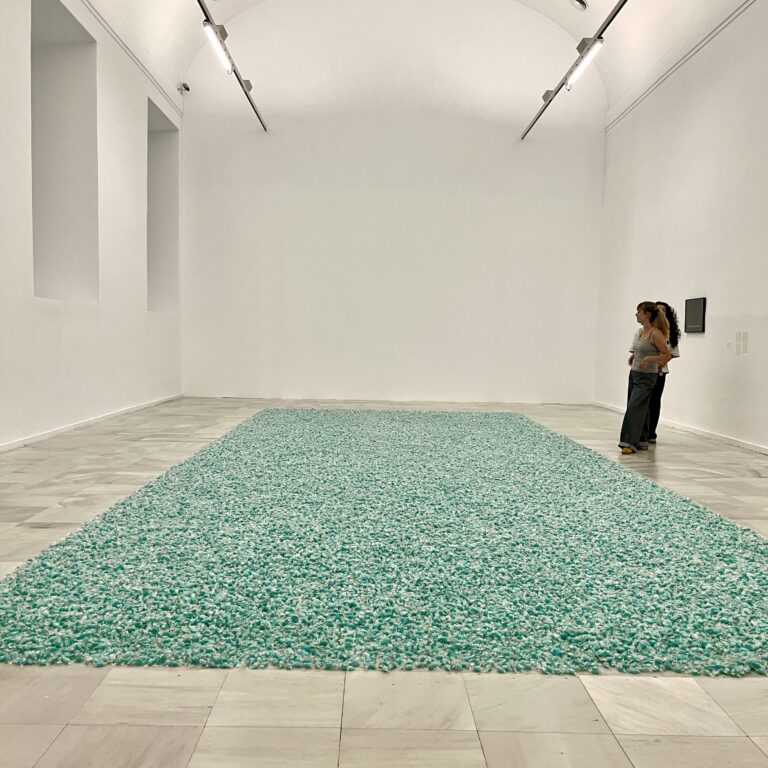
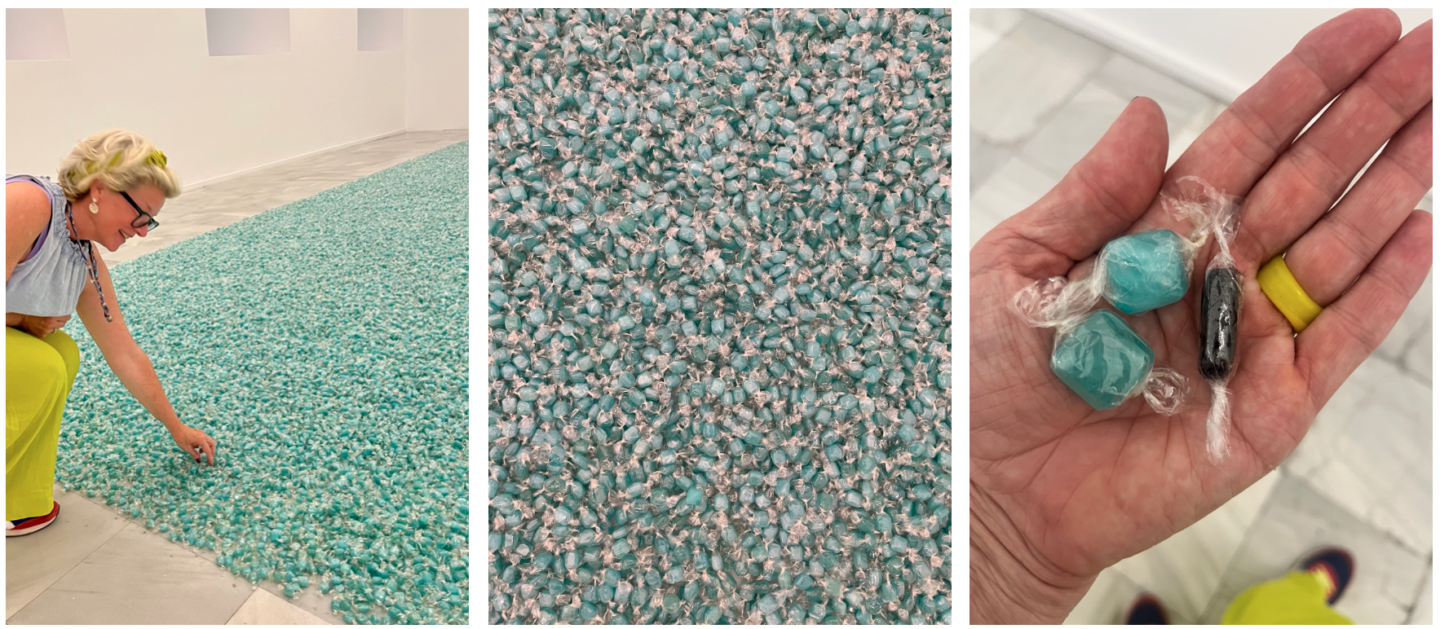
The work Untitled (Revenge) consists of turquoise-blue candies, each wrapped in cellophane and laid out in a rectangle on the floor like a carpet. All the candies together weigh 325 pounds, almost 150 kilograms, as the artist specified. Like nearly all of his candy works, this piece is participatory: visitors are expressly invited to take a candy. The surface shrinks over the course of the exhibition, and the Museo Reina Sofía in Madrid keeps refilling it.
Cuba, Madrid, New York, Miami: The Stations of a Life Far Too Short
Felix Gonzalez-Torres is born in 1957 in Guáimaro, Cuba. At fourteen, his family sends him to Spain as part of an emigration program for Cuban children. He lands in Madrid for a few months, then moves on to Puerto Rico. At eighteen he moves to New York and studies photography and curatorial practice. In 1983 he meets Ross Laycock, his life partner. In 1987 he finishes his studies with a Master of Fine Arts.
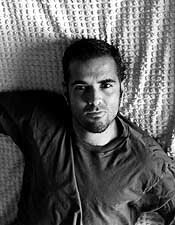
In 1989, at just thirty-two, Gonzalez-Torres finds his way to a reduced, conceptual art. What sets him apart is an openness that hardly any other artist has pursued so consistently. For many of his works, he fixes only a few basic parameters: material, shape, arrangement, weight … He deliberately leaves the installation to each museum and its curators, so the same work comes into being anew and differently at every venue. In conceptual art, the idea counts, not the finished object. Take the turquoise candy carpet: the work is the instruction, not the individual candies. That’s why the “same” candy carpet in Madrid might taste different than it did years earlier in another exhibition. It remains the same work, as long as color and weight are right.
At thirty-three, he has his first solo show: late for the art world, but only six years before his death. What follows is the deepest cut of his life: in 1991, both Ross Laycock and Gonzalez-Torres receive an HIV diagnosis, and Ross dies of AIDS-related illness that same year.
The years after, as his health worsens right up to his own death, are the most productive of his life. In 1995, the Guggenheim Museum organizes a major retrospective. On January 9, 1996, Felix Gonzalez-Torres dies in Miami at thirty-eight of AIDS-related causes.
Felix Gonzalez-Torres: Seven Dates, One Story
In the black picture on the wall beside the candy carpet, I see myself before I even read the text in the bottom third:
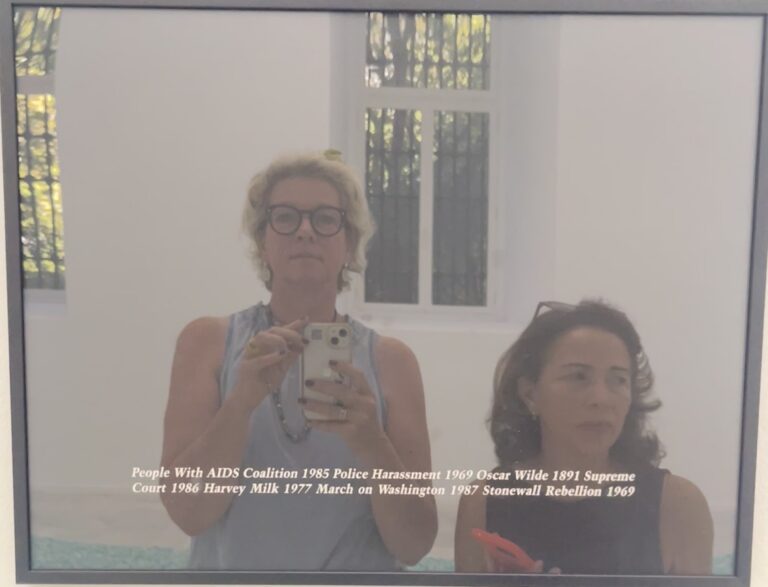
“People With AIDS Coalition 1985, Police Harassment 1969, Oscar Wilde 1891, Supreme
Court 1986, Harvey Milk 1977, March on Washington 1987, Stonewall Rebellion 1969.”
Like almost all of his works, this one has no title. The seven dates, briefly explained:
- People With AIDS Coalition, 1985: People living with AIDS found a self-help and activist group.
- Police Harassment, 1969: Stands for the systematic police raids on gay bars that led up to the Stonewall uprising (see below).
- Oscar Wilde, 1891: Wilde chooses to stay in London and face trial for his homosexuality instead of fleeing.
- Supreme Court, 1986: A ruling confirms that U.S. states may continue to prosecute same-sex sexual acts.
- Harvey Milk, 1977: San Francisco elects Milk as its first openly gay city supervisor, a year before his murder.
- March on Washington, 1987: Large political demonstration where the AIDS Memorial Quilt goes on public display for the first time.
- Stonewall Rebellion, 1969: Protests by the queer community after a police raid on the Stonewall Inn, a bar in New York.
Gonzalez-Torres originally created a large poster, which he installed across from the gay bar Stonewall Inn in 1989, on the 20th anniversary of the Stonewall uprising. A police raid on the bar had set off the multi-day protests in June 1969, and they count as the birth of the modern queer civil rights movement. To fund the project, he also had an edition of 250 screen prints made.
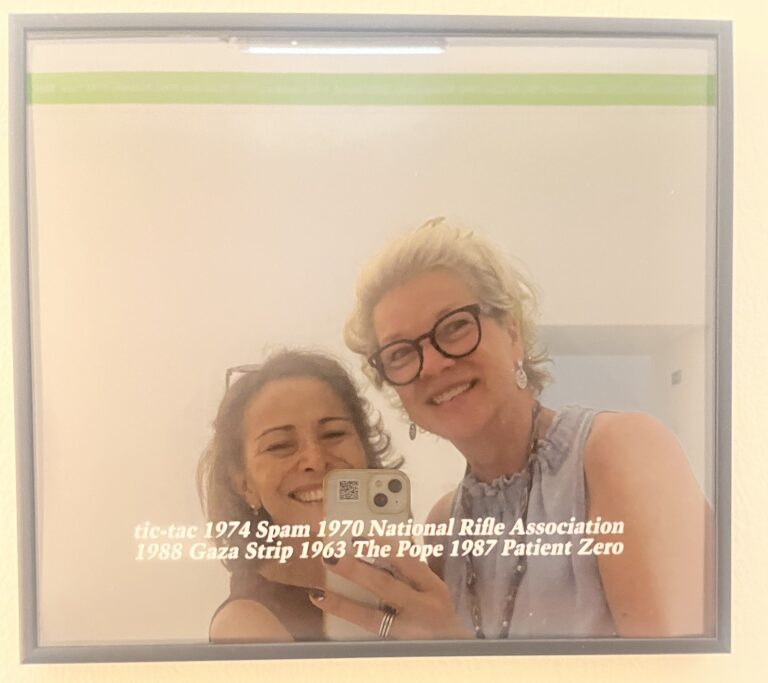
Gonzalez-Torres made several black picture and poster works like this one, each with its own set of dates pointing to queer history, AIDS activism, and political turning points.
Gonzalez-Torres’s Paper Stacks: At Home in Contradiction
The Minimalist but Emotional Conceptual Art of Felix Gonzalez-Torres
In the middle of the big white room, a turquoise carpet glows on the cool marble floor. It looks fluffy and inviting. I step closer and see: the carpet is made of thousands of individually wrapped candies. I take one, unwrap it, and pop it in my mouth: sweet peppermint.
The work Untitled (Revenge) consists of turquoise-blue candies, each wrapped in cellophane and laid out in a rectangle on the floor like a carpet. All the candies together weigh 325 pounds, almost 150 kilograms, as the artist specified. Like nearly all of his candy works, this piece is participatory: visitors are expressly invited to take a candy. The surface shrinks over the course of the exhibition, and the Museo Reina Sofía in Madrid keeps refilling it.
Cuba, Madrid, New York, Miami: The Stations of a Life Far Too Short
Felix Gonzalez-Torres is born in 1957 in Guáimaro, Cuba. At fourteen, his family sends him to Spain as part of an emigration program for Cuban children. He lands in Madrid for a few months, then moves on to Puerto Rico. At eighteen he moves to New York and studies photography and curatorial practice. In 1983 he meets Ross Laycock, his life partner. In 1987 he finishes his studies with a Master of Fine Arts.
In 1989, at just thirty-two, Gonzalez-Torres finds his way to a reduced, conceptual art. What sets him apart is an openness that hardly any other artist has pursued so consistently. For many of his works, he fixes only a few basic parameters: material, shape, arrangement, weight … He deliberately leaves the installation to each museum and its curators, so the same work comes into being anew and differently at every venue. In conceptual art, the idea counts, not the finished object. Take the turquoise candy carpet: the work is the instruction, not the individual candies. That’s why the “same” candy carpet in Madrid might taste different than it did years earlier in another exhibition. It remains the same work, as long as color and weight are right.
At thirty-three, he has his first solo show: late for the art world, but only six years before his death. What follows is the deepest cut of his life: in 1991, both Ross Laycock and Gonzalez-Torres receive an HIV diagnosis, and Ross dies of AIDS-related illness that same year.
The years after, as his health worsens right up to his own death, are the most productive of his life. In 1995, the Guggenheim Museum organizes a major retrospective. On January 9, 1996, Felix Gonzalez-Torres dies in Miami at thirty-eight of AIDS-related causes.
Felix Gonzalez-Torres: Seven Dates, One Story
In the black picture on the wall beside the candy carpet, I see myself before I even read the text in the bottom third:
“People With AIDS Coalition 1985, Police Harassment 1969, Oscar Wilde 1891, Supreme
Court 1986, Harvey Milk 1977, March on Washington 1987, Stonewall Rebellion 1969.”
Like almost all of his works, this one has no title. The seven dates, briefly explained:
- People With AIDS Coalition, 1985: People living with AIDS found a self-help and activist group.
- Police Harassment, 1969: Stands for the systematic police raids on gay bars that led up to the Stonewall uprising (see below).
- Oscar Wilde, 1891: Wilde chooses to stay in London and face trial for his homosexuality instead of fleeing.
- Supreme Court, 1986: A ruling confirms that U.S. states may continue to prosecute same-sex sexual acts.
- Harvey Milk, 1977: San Francisco elects Milk as its first openly gay city supervisor, a year before his murder.
- March on Washington, 1987: Large political demonstration where the AIDS Memorial Quilt goes on public display for the first time.
- Stonewall Rebellion, 1969: Protests by the queer community after a police raid on the Stonewall Inn, a bar in New York.
Gonzalez-Torres originally created a large poster, which he installed across from the gay bar Stonewall Inn in 1989, on the 20th anniversary of the Stonewall uprising. A police raid on the bar had set off the multi-day protests in June 1969, and they count as the birth of the modern queer civil rights movement. To fund the project, he also had an edition of 250 screen prints made.
Gonzalez-Torres made several black picture and poster works like this one, each with its own set of dates pointing to queer history, AIDS activism, and political turning points.
Gonzalez-Torres’s Paper Stacks: At Home in Contradiction
Side by side on the floor, almost like twins, stand two stacks of paper, about knee-high, the so-called Stacks. The sheets of one stack carry the sentence Nowhere better than this place, the sheets of the other Somewhere better than this place. I take one sheet from each stack and roll them together.
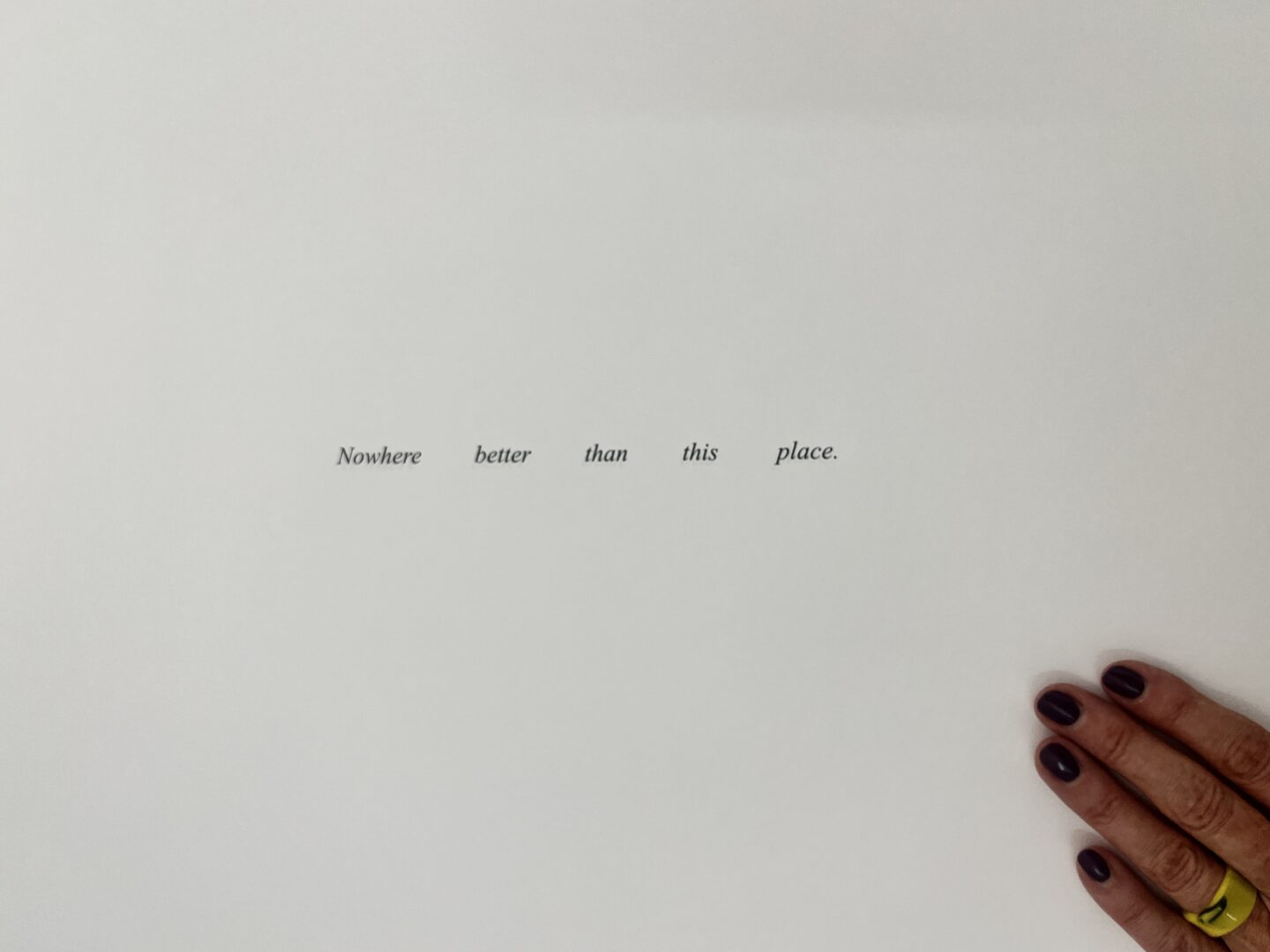
The work is one of the earliest and best-known of Felix Gonzalez-Torres’s paper stack pieces. Visitors may take sheets, and the museum refills the stack again and again over the course of the exhibition.
The two sentences contradict each other, and yet both are true. One sentence longs for a better place; the other confirms: right here, right now is the only possible place. For an artist who grew up between Cuba, Spain, Puerto Rico, and New York, and who himself moved back and forth between exile and arrival, this double sentence reads like a very personal truth.
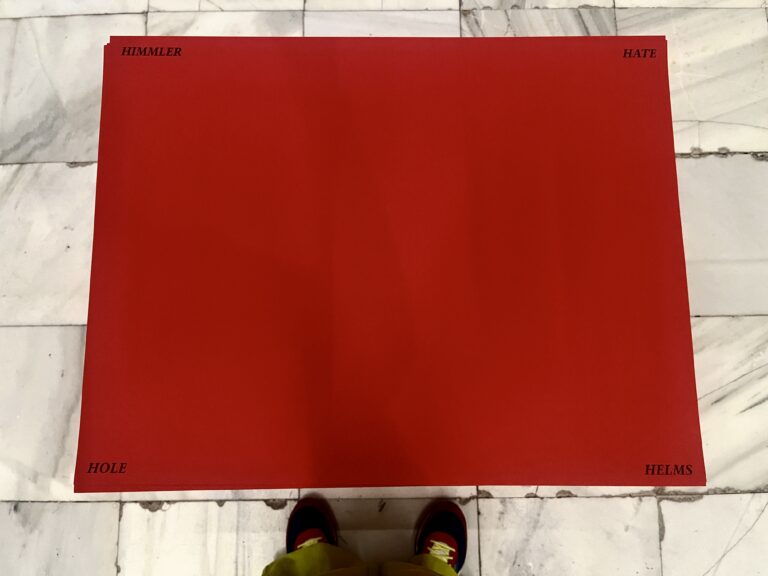
Gonzalez-Torres made paper stacks again and again, in different colors and with different texts or images. Another room of the exhibition holds, for example, a stack of red paper with black lettering: Untitled (Himmler, Hate, Hole, Helms). A word sits in each of the four corners: the name of a Nazi, Heinrich Himmler, followed by Hate, Hole and the name of the ultraconservative U.S. senator Jesse Helms. Here Gonzalez-Torres puts historical Nazi persecution and contemporary American politics on equal footing, one of his most direct, most unvarnished political works.
What Remains When a Light Bulb Goes Out: Light as an Exercise in Letting Go
A curtain of string lights hangs from the room’s high ceiling to the floor. The ends form small piles of light bulbs on the marble floor. Warm light surrounds me from every side.
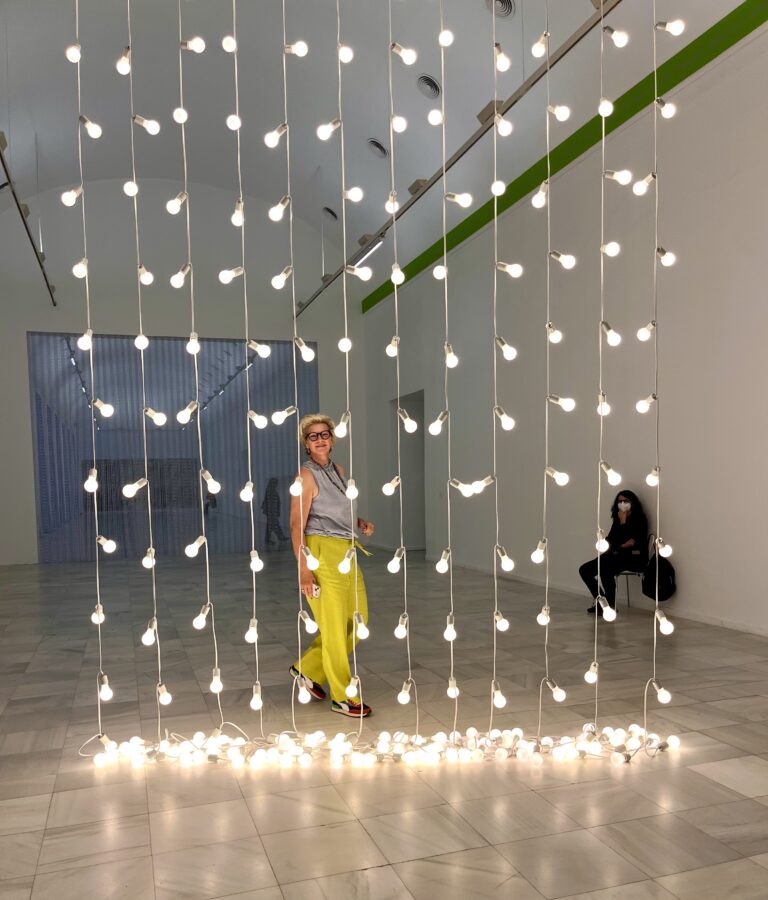
Untitled (North) consists of twelve separate strands, each with 22 light bulbs in porcelain sockets on a cable. As with almost all of his works, Gonzalez-Torres gives no fixed installation instructions. Each institution decides anew how to spread, bundle, or hang the strands in the space.
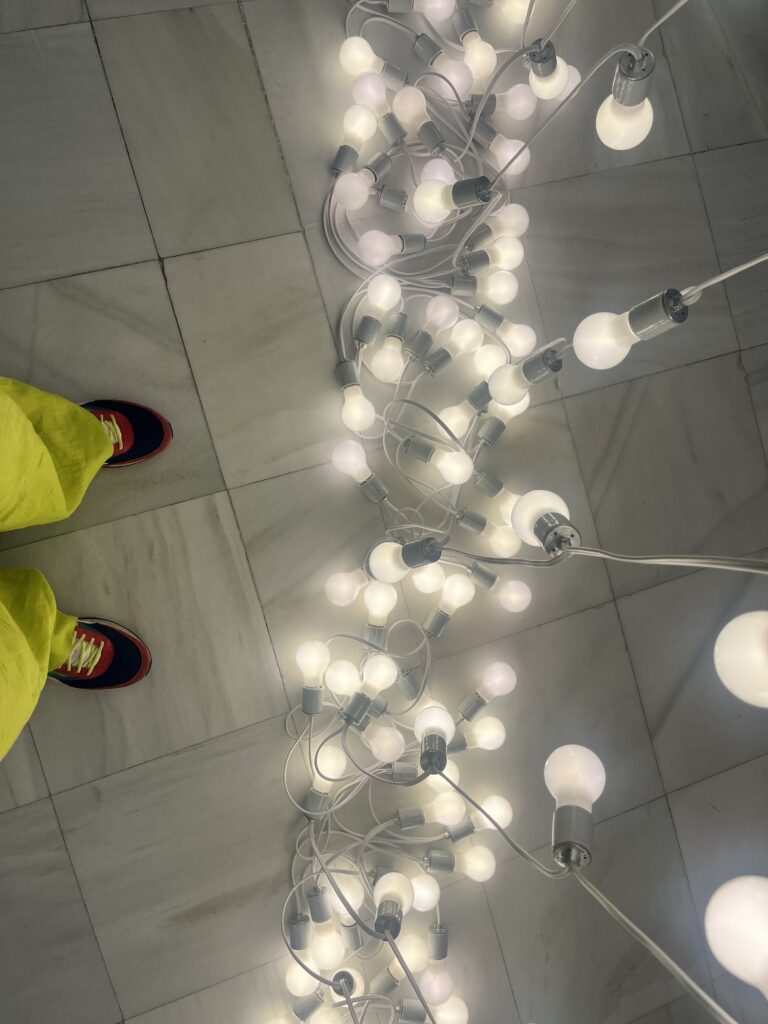
Gonzalez-Torres started the string light works shortly after the death of his partner Ross Laycock. In an interview, he described wanting to create a work with a vanishing, unstable, and fragile form. When a bulb burns out, nobody may replace it. That is how he confronted his fear of watching Ross vanish further from his memory every day. Read this way, the string lights are less festive decoration than an exercise in dealing with loss: art that speaks of eternal love and mortality simply by glowing.
At the Sammlung Hoffmann in Berlin, I was once completely blown away by a very differently installed string light work by Gonzalez-Torres.
A Curtain That Closes Again
A curtain of hundreds of bead strands divides one of the exhibition rooms: green, transparent, and silver beads in alternation, from the ceiling almost to the floor. I feel the beads on my arms and face and hear a soft clacking as they settle down again behind me.
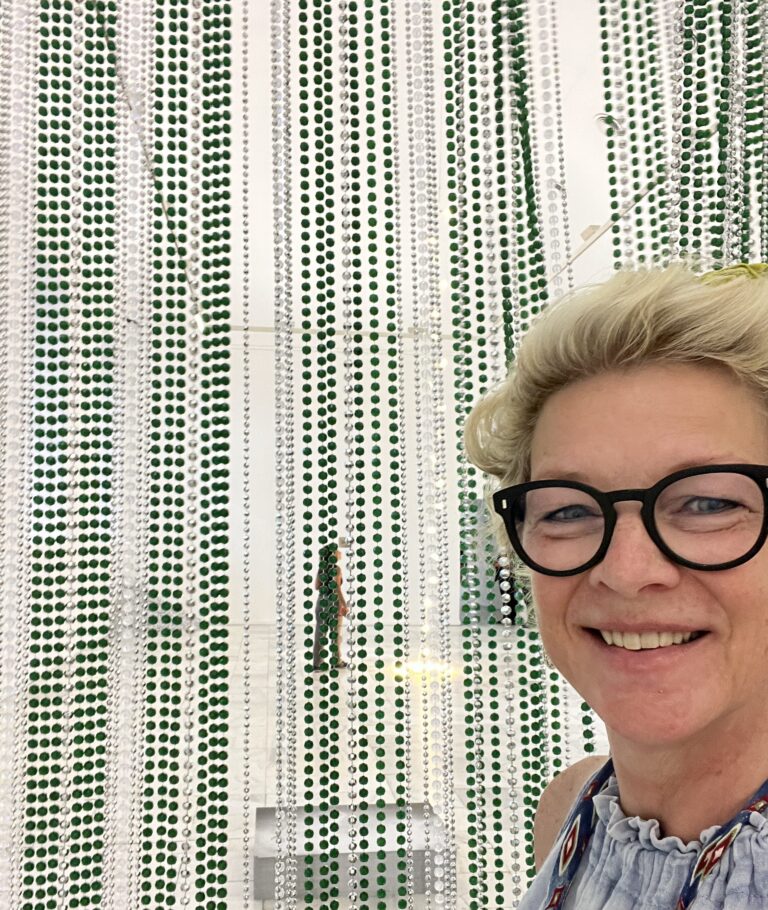
Untitled (Beginning) is one of five bead curtain works in total. All follow the same principle: the bead strands fill a passageway completely and reach as close to the floor as possible without touching it, so they can swing freely.
The title, Beginning, is the key here. For Gonzalez-Torres, green, transparent, and silver are the colors of renewal and rebirth. Unlike the candies or paper stacks, which visitors can take with them, nothing remains here, because the work consists entirely of the moment of walking through. Nobody gets past the curtain without touching it and becoming part of it: a transition you make with your own body.
Conclusion
Felix Gonzalez-Torres works with sparse, reduced installations and the simplest everyday objects. Formally, he stands in the tradition of Minimalism and the conceptual art of the 1960s and 1970s, but instead of cool distance, he bets on feeling and closeness. He lets visitors become part of the work and turns reduced form into an emotional experience: take, touch, walk through, feel.
Despite displacement, loss, and experiences of discrimination and violence, Gonzalez-Torres never becomes a bitter artist. He deliberately chooses a light, inviting art to tell the story of heavy subjects.
His art is timely, and with every new exhibition, a new generation of visitors keeps writing it forward.
To close, a quote from Felix Gonzalez-Torres himself:
“I want to work within the contradictions of the system and try to create a better place.
I think revolutions were a really nice idea in the nineteenth century and in the early part
of this century, but we must take into consideration the technological advances that are
being made right now. These technological shifts are happening in a world that has
become very fragile and also very small.”
The Reina Sofía reinterprets this stance today: in a world full of algorithms and disinformation, his patient wish to change the system from within into a better one feels more relevant than ever.
You can read more about Hans Haacke, another conceptual artist, here.
Felix Gonzalez-Torres writes love into everyday things – britta kadolsky
Diesen Beitrag teilen:
Newsletter
Wenn ihr keinen Beitrag verpassen und über neue Artikel informiert werden möchtet, abonniert meinen Newsletter.
"Was kann Kunst" ist auch auf:
Glasstress 2026: An Art Star Lineup at Berengo That Nobody Sees
am 3.10.2026
How Jenny Saville challenges the way we look at women's bodies
am 12.8.2026
Brancusi, the modern sculptor
am 13.7.2026
Venice: A Short Guide for Art Lovers
britta kadolsky am 23.6.2026
Venice Biennale 2026: My Five Favorite Pavilions
am 11.6.2026
Günther Uecker: Nagelkünstler, Weltreisender, stiller Poet
britta kadolsky am 10.5.2026
Yayoi Kusama: Dots That Never Stop
am 19.4.2026
Why Art Matters: The Political Power of Art and the Russian Pavilion Everyone Is Fighting Over
britta kadolsky am 30.3.2026
Thomas Bayrle erfindet das Große im Kleinen
britta kadolsky am 9.3.2026
Xenia Hausner: Schafft eine Bühne für selbstbestimmte Frauen
britta kadolsky am 16.2.2026
Ikonen der Kunstgeschichte
Saskia Wolf am 21.1.2026
Papier in der Kunst: Papier inspiriert Kunst über Jahrhunderte
britta kadolsky am 22.12.2025
Warum belebt Ophelia Kunst und Popkultur?
britta kadolsky am 17.11.2025
Fünf Graphic Novels, die Kunst neu erzählen
britta kadolsky am 3.11.2025
5 berühmte Künstlerpaare der Kunstgeschichte - Zwischen Passion und Untreue
Saskia Wolf am 18.10.2025
Max Liebermann – Maler des Lichts und des Lebens
britta kadolsky am 26.9.2025
Chaos, Körper, Farben: Die Kunst von Pipilotti Rist
britta kadolsky am 27.8.2025
CIA, Art, and the Cold War: documenta II as a Political Stage
am 17.7.2025
Kunst beim Spazierengehen: 10 Skulpturen in Frankfurt
britta kadolsky am 2.7.2025
David Hockney - Zwischen Licht und Linie
britta kadolsky am 25.5.2025
Im Innern des Papiers – Skulpturen von Angela Glajcar
britta kadolsky am 7.5.2025
April, April: Die Kunst des Täuschens
britta kadolsky am 13.4.2025
Andreas Mühe – Im Banne des Zorns
britta kadolsky am 16.3.2025
Martin Kippenberger - Ein Künstler, der Wettsaufen und Punkmusik liebte
britta kadolsky am 18.2.2025
Die Zahl 100 in der Kunst: Symbolik und Bedeutung
britta kadolsky am 23.1.2025
Frauenpower: Künstlerinnen und Erfinderinnen
Saskia Wolf am 16.12.2024
Hans Haacke: Politische Kunst mit Tiefgang
britta kadolsky am 2.12.2024
Kunst unter Bäumen – der Internationale Waldkunstpfad in Darmstadt
Ruth Fühner am 10.11.2024
Blut, Fleisch, Kot: Ungewöhnliche Materialien in der Kunst:
britta kadolsky am 28.10.2024
Kunst und Kamera: Die vergessene Geschichte der Fotografinnen
britta kadolsky am 1.10.2024